It was my folly to imagine the weather in Kenya in the same manner that most people presume Canada is a cold and frozen wasteland. Despite lying on the equator, the climate during my November visit to the Masai Mara National Reserve was like a fine Toronto day in September but with no humidity. It’s little wonder that this very region is the birthplace of the human species. I’m actually situated in the Great Rift Valley that extends south to Tanzania covering the first hominid skull finds at Olduvai Gorge by Louis and Mary Leakey in the 1950s and north to Ethiopia where Lucy, the 3 million year old hominid skeleton, was unearthed in the 1970s. Every human has an instinctual and subconscious affiliation for this area where the rains are consistent and vegetation grows well, there are no mosquitoes to inflict dangerous parasites, and there is plenty of game to hunt. I felt instantly at home.
I had contemplated going on a photographic African safari tour for several years when I chanced upon the Maasai Dental Clinic which had been constructed in 2008 by the World Dental Health Organization (WDHO) with the funding help of several public service clubs based in Washington state. The facility is always looking for overseas dentists to volunteer two or more weeks of their time to see dental patients in return for guided safari tours on the weekends and free room and board. I’m not getting any younger so I decided I better do this now while I still can.
The clinic is quite modern and totally self sufficient with solar generated electricity and its own water tower (not potable) and solar heated hot water. We are technically in the bush and have to surround the property with an electrified perimeter fence day and night to keep the predators out. Fortunately, there is satellite Internet service to keep me in touch with the rest of the world as cell service was practically nonexistent. To emphasize how remote our location is, we are 7 km from the nearest paved road known as the C12. To travel the dirt road requires a true 4×4 vehicle like the clinic’s safari equipped long wheelbase Toyota Land Cruiser because the road has been long neglected by the government and seasons of rain have destroyed the surface and carved in tire swallowing/axle breaking ruts. Our clientele were the rural residents who found it very difficult to journey even the 30 km to the nearest small city for dental services.
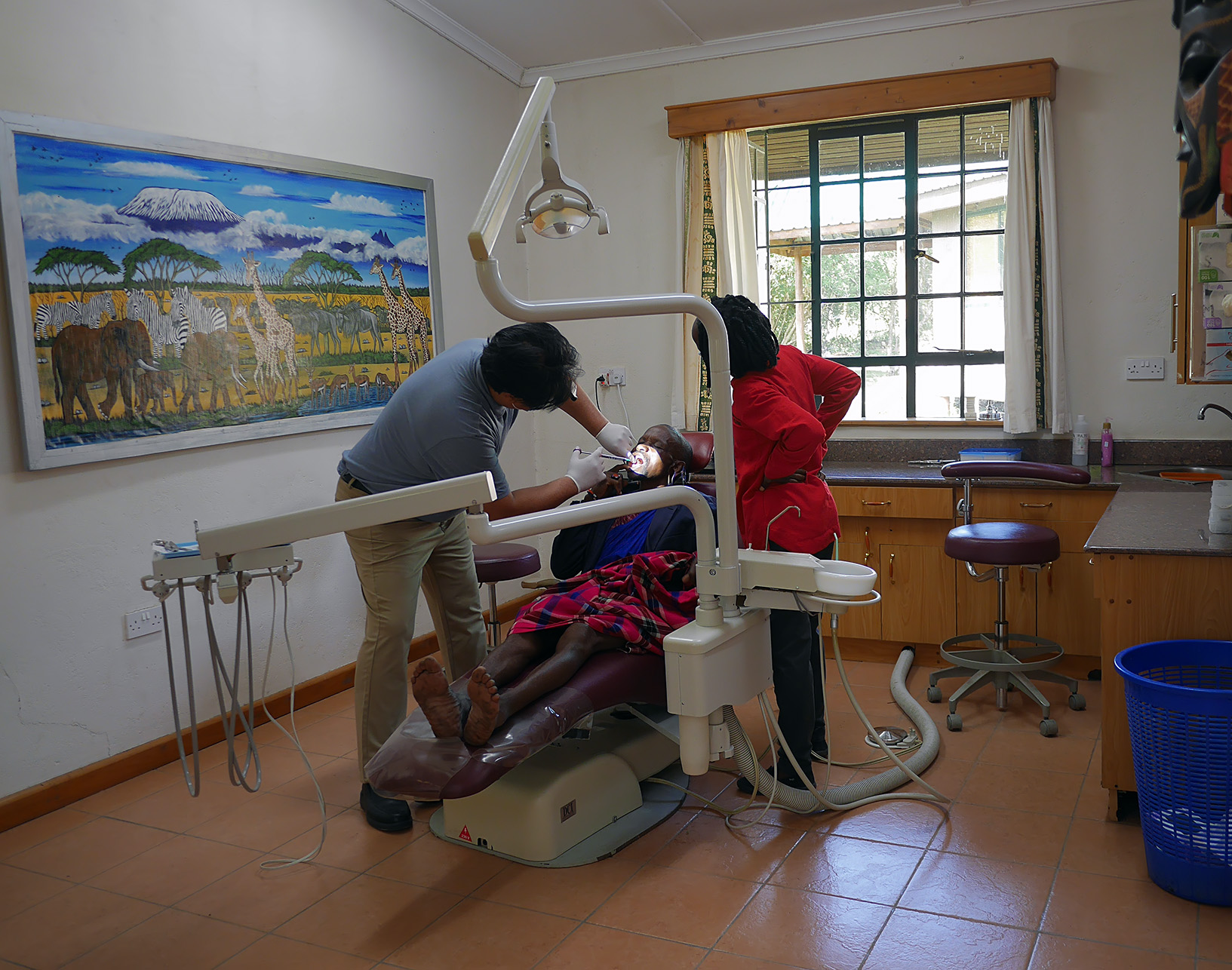
With three dental chairs and three very capable dental assistants, I could see patients with incredible efficiency. Add in not having to read or write patient charts or review medical histories (given that anybody who could walk several kilometres to the clinic must be healthy) I saw upwards of thirty patients a day. Nearly every situation required the extraction of teeth since the Maasai would ignore the dental problem until it was simply too late for any other outcome. It was brutal dentistry like the medicine practised during the US Civil War where every bullet wound was an amputation. This was also not personally a sustainable pace but it is very difficult to turn a suffering person away after waiting since 8 AM for a chance to see a dentist. There was no attempt to schedule patients, they came when they wanted. Anybody who has suffered the agony of a toothache knows the relief that follows when the infected tooth is treated or removed. The team knew we were providing a vital service but in the Maasai culture, no consideration or acknowledgement is ever given towards people simply doing their job. I get that and it makes sense. There should be an expectation that people, especially health professionals, should be competent at what they do. But it doesn’t help make a long day easier to get through.
One more comment about dentistry before we get to photography. I’m not one to boast about anything but I do know that I’m better than the average general dentist at removing teeth quickly and atraumatically. I attribute this to my experience in restoring vintage motorcycles and maintaining my modified Rx7. Anybody who has had to struggle with removing a rusty or stripped fastener understands the ordeal with a difficult tooth extraction. The same rules of physics apply and you have to radically change the conditions in order to succeed. Those that keep trying the same approach or are too meek to remove bone and section the tooth into individual roots will always fail. Which is why I always advise students to have the widest breadth of life experience before specializing and focusing onto a career, the person who has lived the most with have the most to draw upon during any difficult scenario.
The previous image was taken with my Lumix GM1 with the 14mm f/2.5 lens. All wide angle shots were taken with this camera while the rest were taken with the OM-1 and the Zuiko 150-400mm f/4.5. As a backup body, I brought the E-M1X with the Leica 9mm f/1.7 lens.
There is plenty of wildlife to discover even within the clinic property, which I indulged in before work, after work, and during any lulls in between. Baboons, Vervet monkeys, Zebra and Impala were common visitors although latter two were not able to circumvent the fencing. The primates had learned sometime ago that the fencing was electrified and climbed the fence posts carefully to get over them or if they were small enough wriggled under the lowest wire.
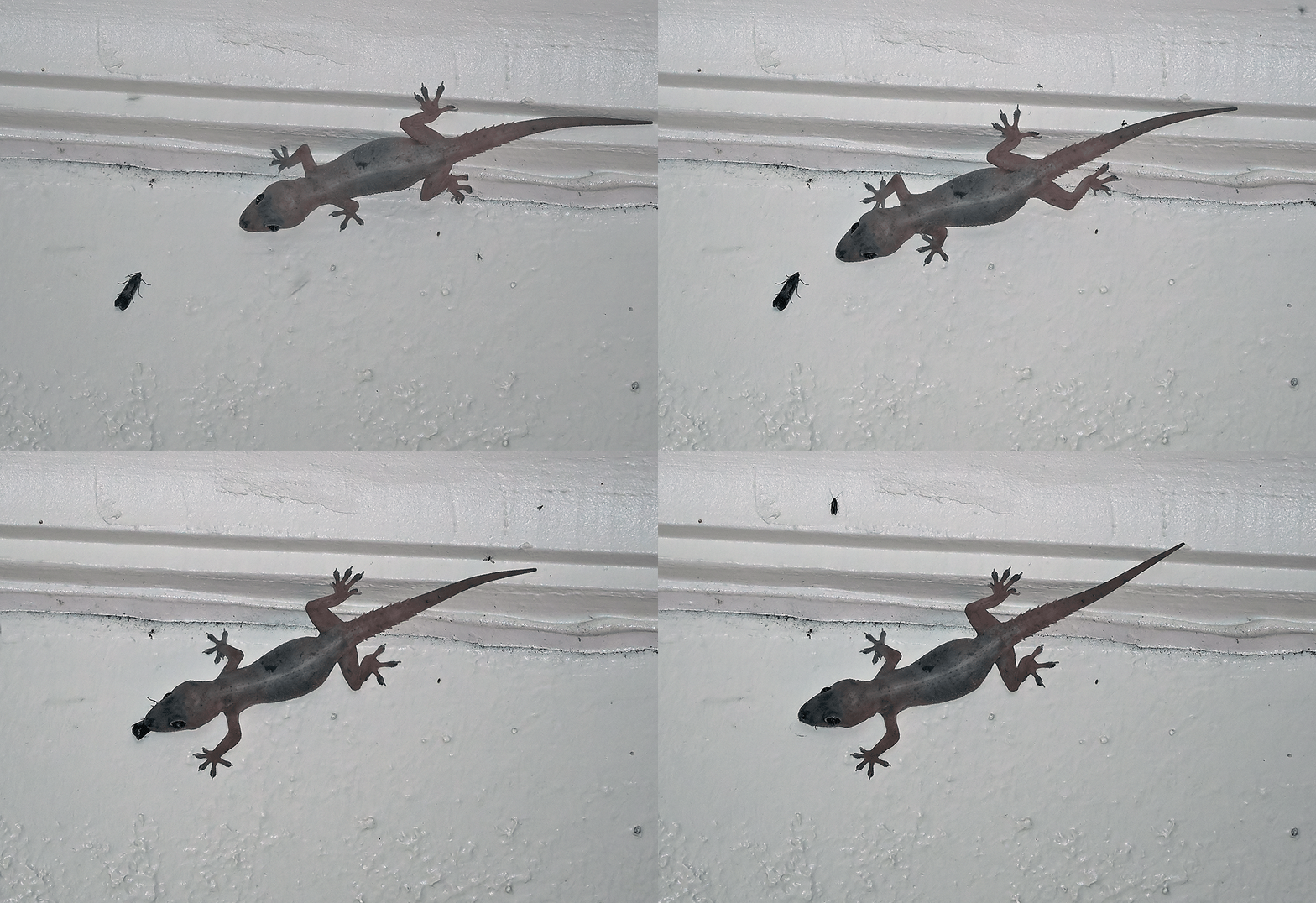
My actual first exposure to African fauna was discovering that I had several room mates with which to share my luxurious apartment suite. After sunset, several Mount Kenya dwarf geckos appeared and apparently drove some dentists to flight. I appreciated them for keeping the bug population down inside the apartment but photographing them was difficult. Turning on any ceiling lights just caused them to scatter so I ended up using the 5W LED spotlight from my dental loupes which I clipped onto the end of the lens hood of the Zuiko 150-400mm f/4.5 lens and had the perfectly sized illuminated circle of light at 400mm focal length.
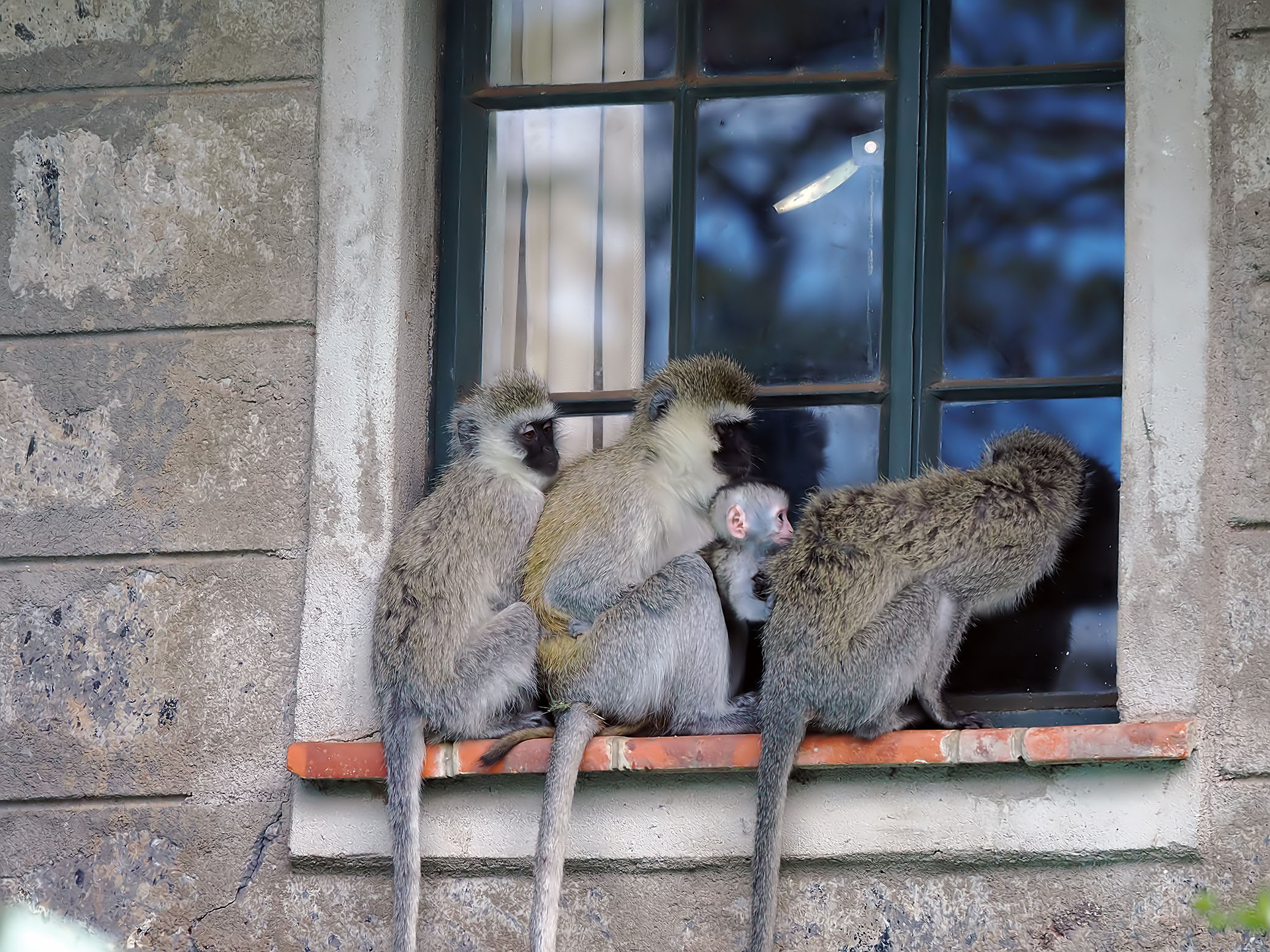
I entered the clinic on my first morning of work and screamed, “There are monkeys in the clinic.” My assistants had left the front door ajar while sweeping out the tile floor and four Vervet monkeys had immediately strode in … looking for food as always. They took one look at me and ran off screaming. Apparently they also hold a grudge for I had to dodge thrown feces when I tried to take several images of them, later. Often I would awaken in the morning to find several faces peering in as they persistently kept looking for a way in … to wreak a very monkey style of havoc as the clinic cook has found out.
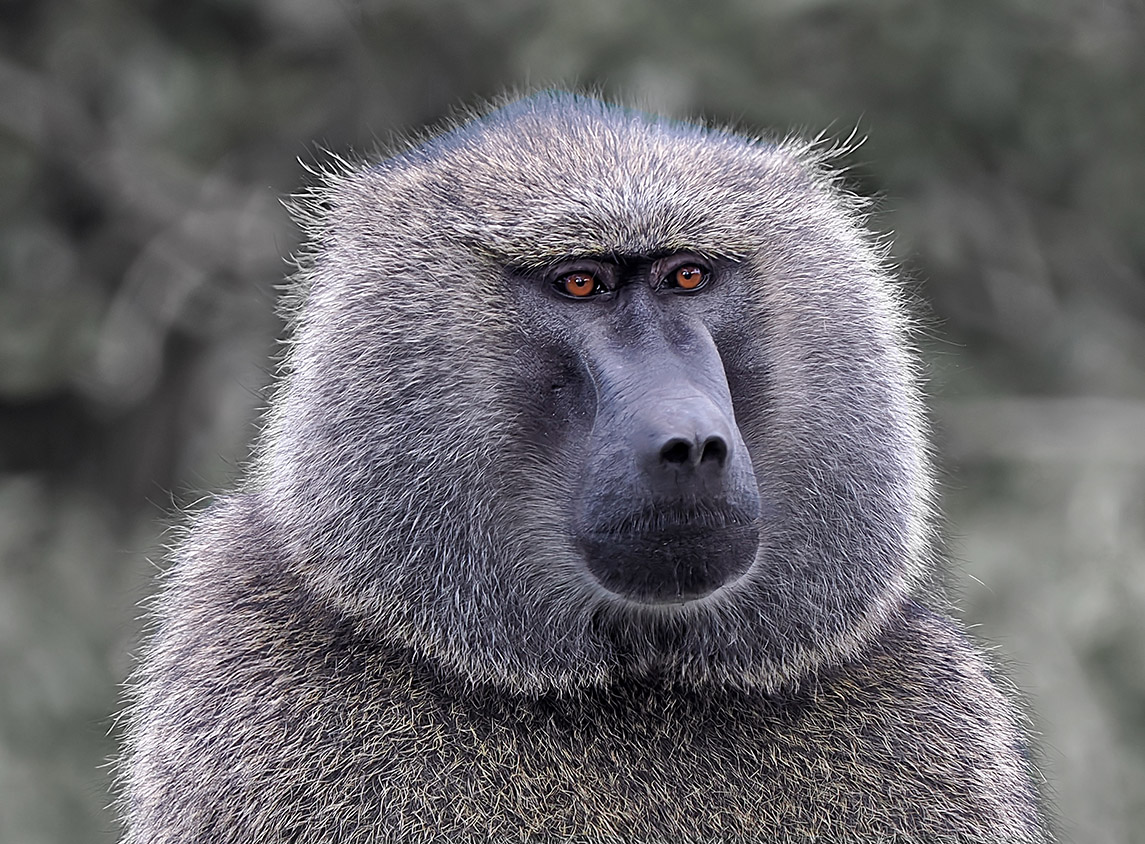
All ethical wildlife photographers maintain their distance to reduce their presence as a stressor on the subject. I had no difficulty doing so with the Olive Baboon for he is a fearsome fellow . This is a hand held high resolution image that has been heavily cropped into a portrait from the OM-1 and Zuiko 150-400mm f/4.5 so I’m actually not that close to him at all. Some animals are better targets for high resolution mode than others and even when the camera is able to produce a high resolution image, small movements can cause ghosting artefacts on closer examination.
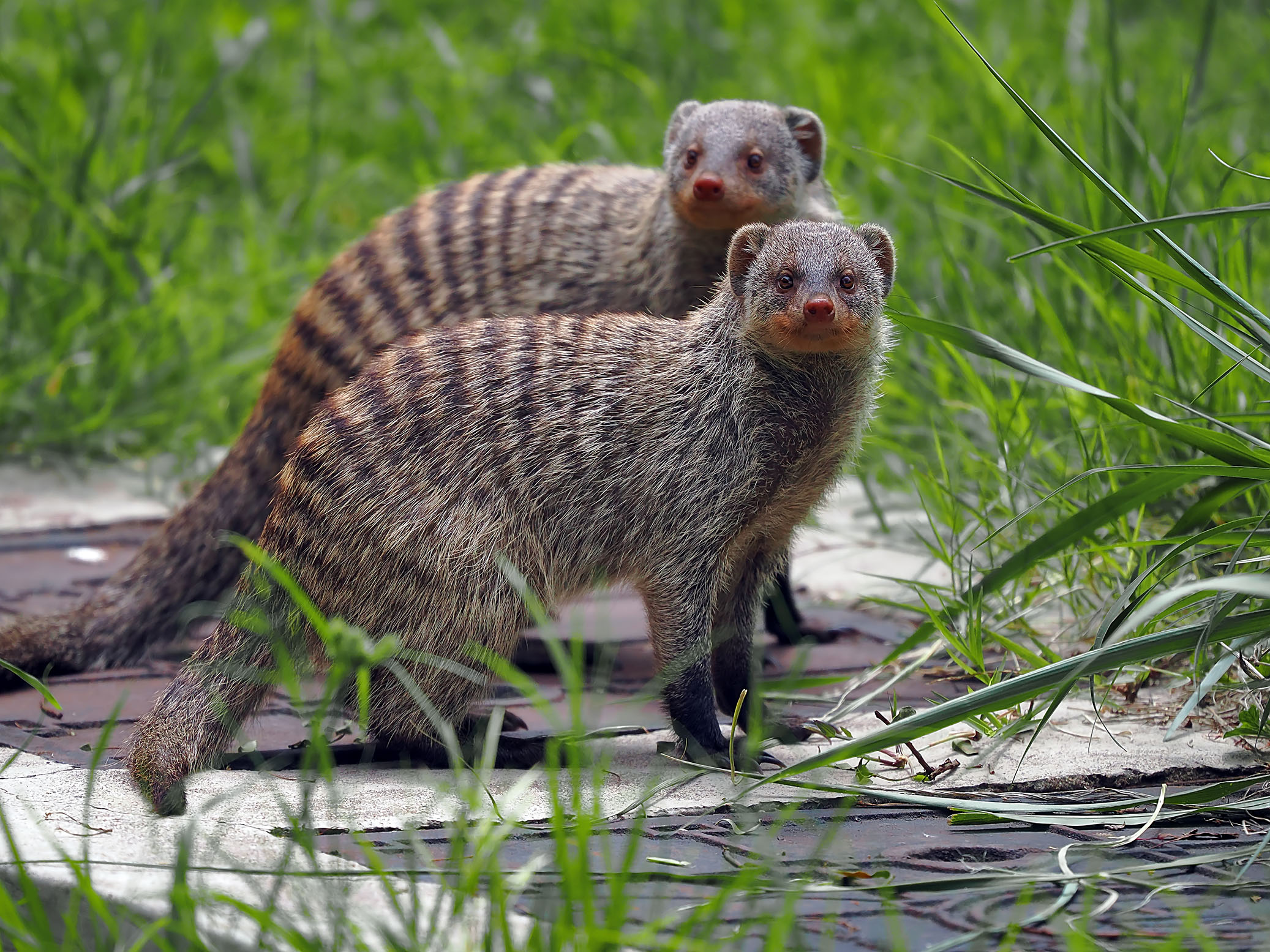
One afternoon I stepped outside and was astonished to witness a large group of more than a dozen banded mongoose passing through the clinic property. Again they were likely looking for food and the clinic disposes of wastes daily in a burn pit but apparently there is some food residue left uncombusted. I’ve seen birds, the Vervets and the Baboons inside the pit scrounging for leftovers. The mongoose are renowned for their immunity to snake venom allowing them to hunt and eat dangerous snakes. They have acquired a minor mutation in the structure of their acetylcholine receptors that does not allow snake venom proteins to bind to them.
This herd of Plains Zebras appears to return periodically to forage just outside the clinic’s property. They seem fascinated with either seeing me or seeing a person each time I encounter them. Perhaps they have short memories. Rather than a herd, it technically is more accurate to refer to them as a harem as the group represents one stallion and the mares that he has impregnated.
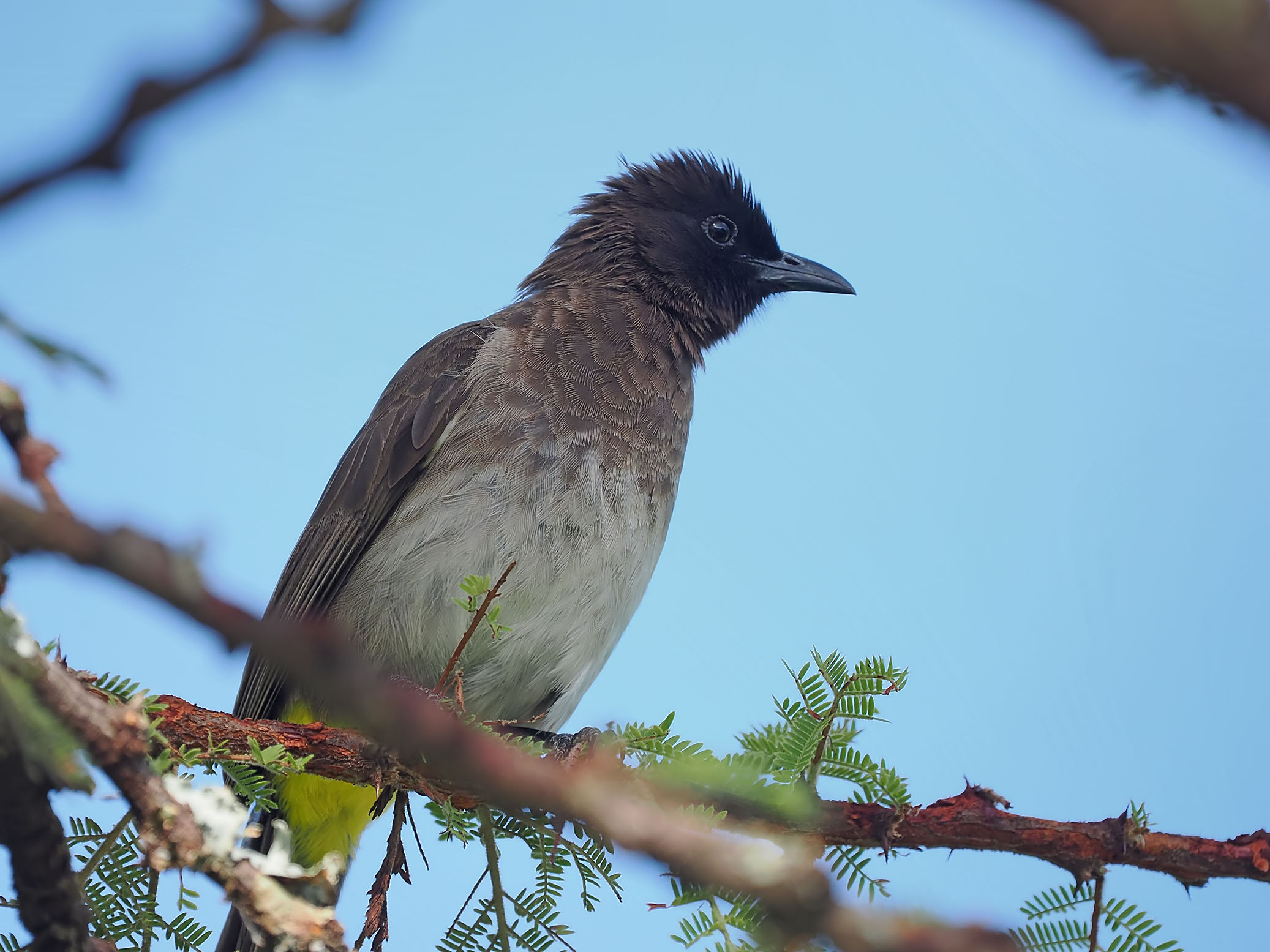
There are several large trees on the property and I have been alert to alien bird calls leading me to birds with distinctive plumage. This is the first of four new African species that I have discovered, the Dark Capped Bulbul.
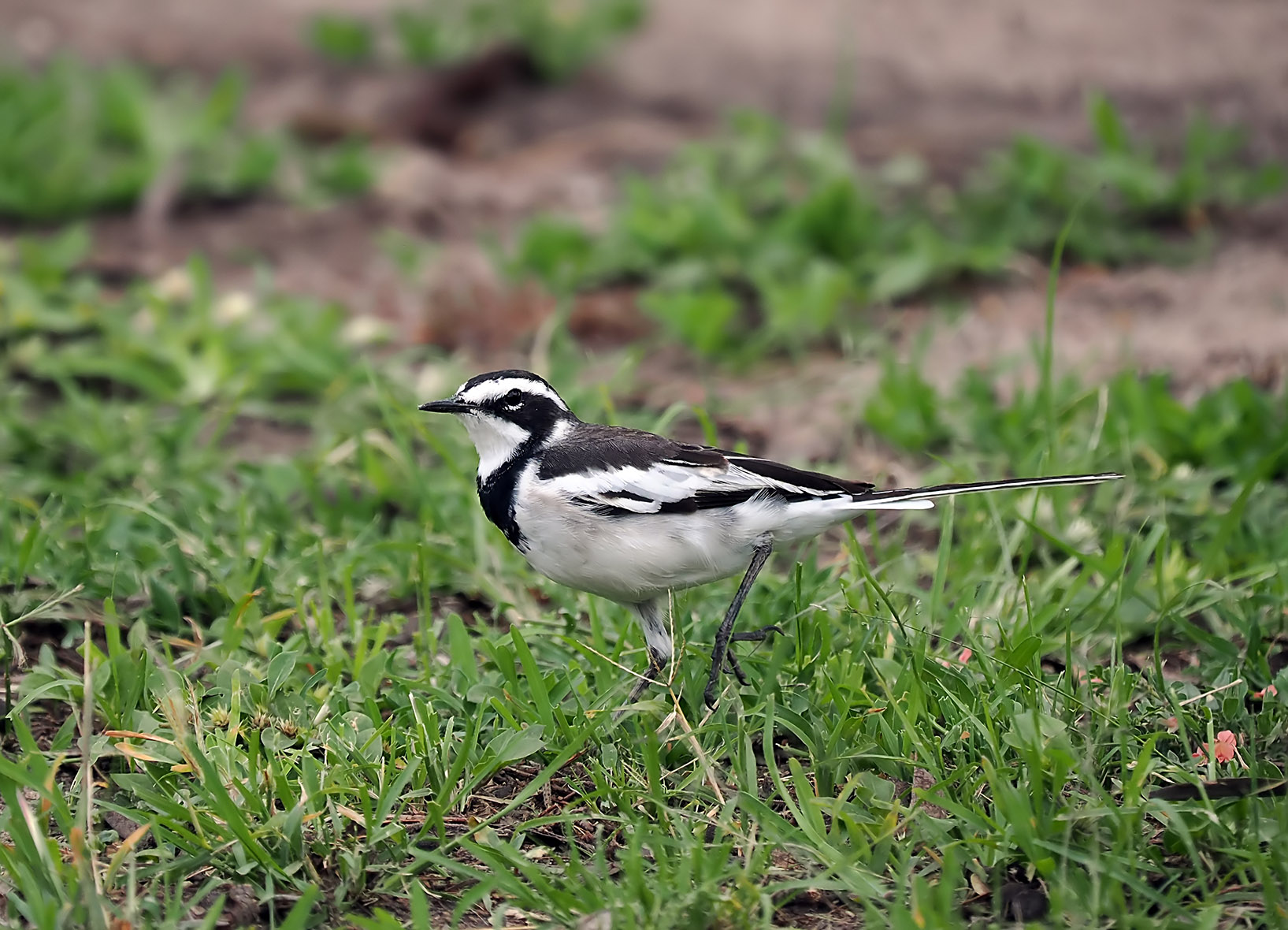
This is the African Pied Wagtail.
This is the exquisite African Paradise Flycatcher. The extra long tail feather gives this bird a very dramatic flight appearance as he tends to hover while hunting insects on the underside of leaves.
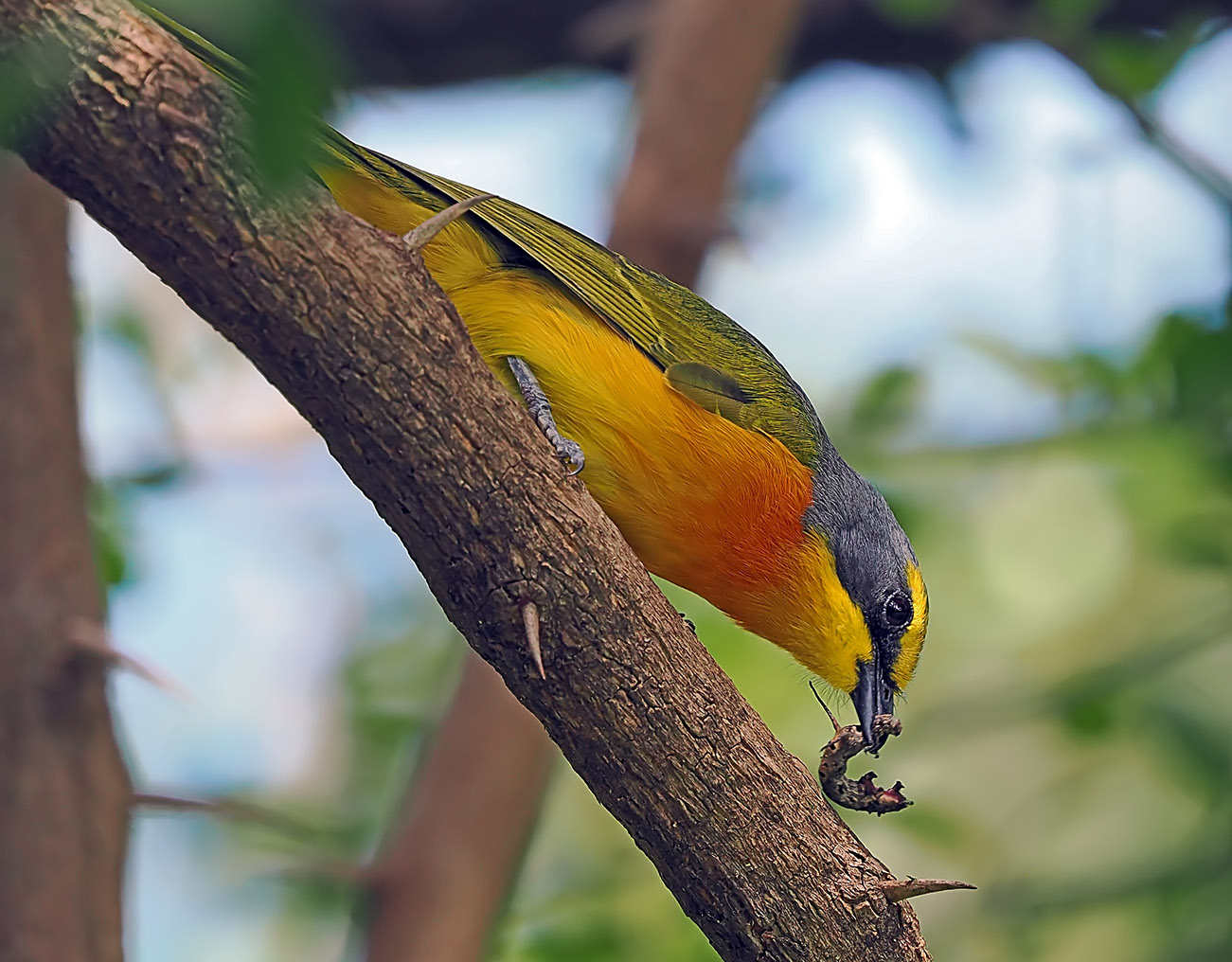
This Orange Breasted Bushshrike has caught himself an interesting lunch. The caterpillar appears to mimic the coloration and appearance of the acacia tree and could almost pass for a small budding branch. Its antennae might even resemble the thorns that protrude from this iconic tree.
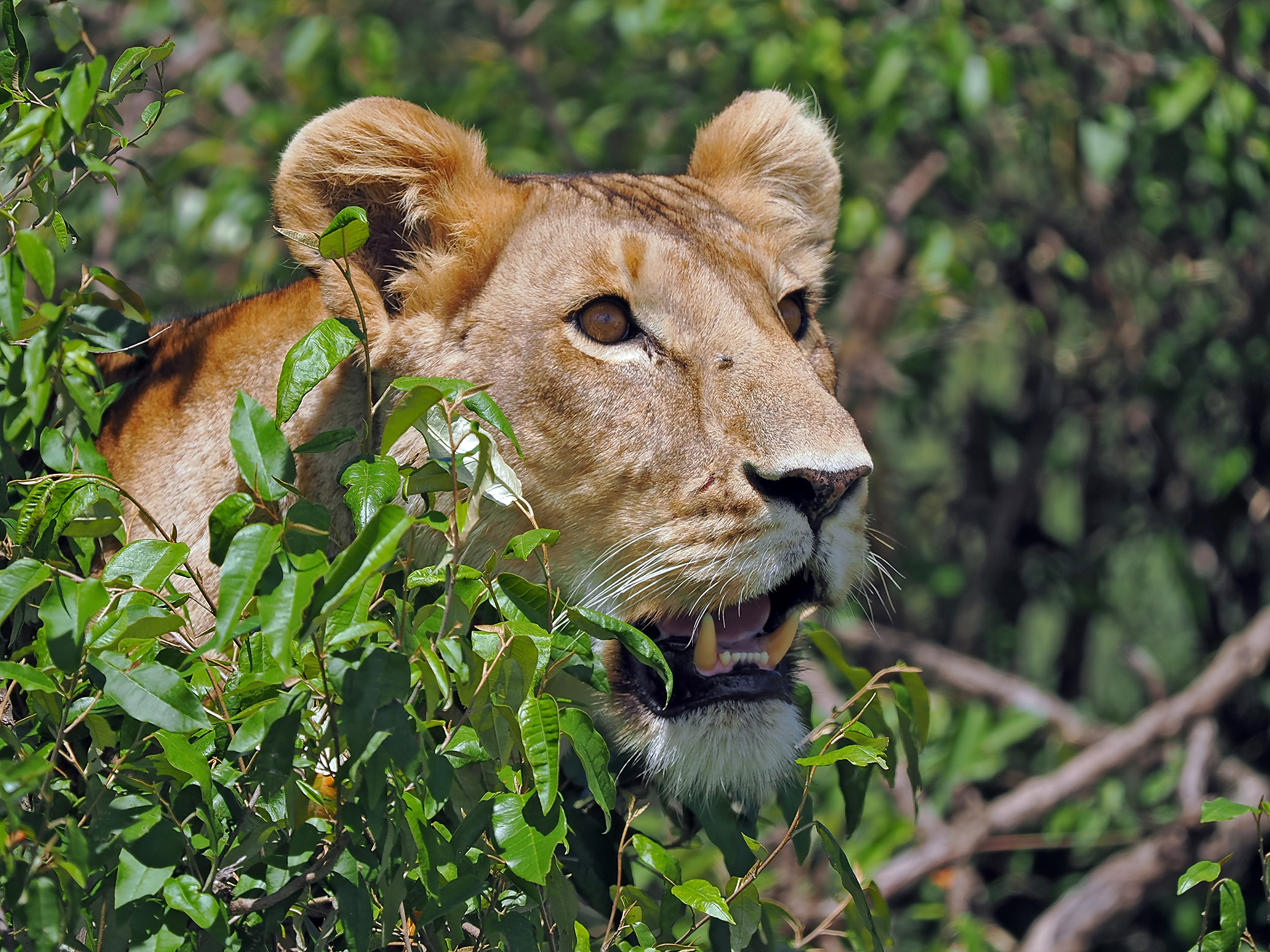
Encountering a big cat hiding in the undergrowth is a dangerous way to meet them! It’s the premier responsibility of all the safari guides to show their clients … the lions. They keep in radio contact with each other with the latest lion sightings in the park and unfortunately there is a mad rush of vehicles to those locations. There are between 800-900 lions living in the reserve.
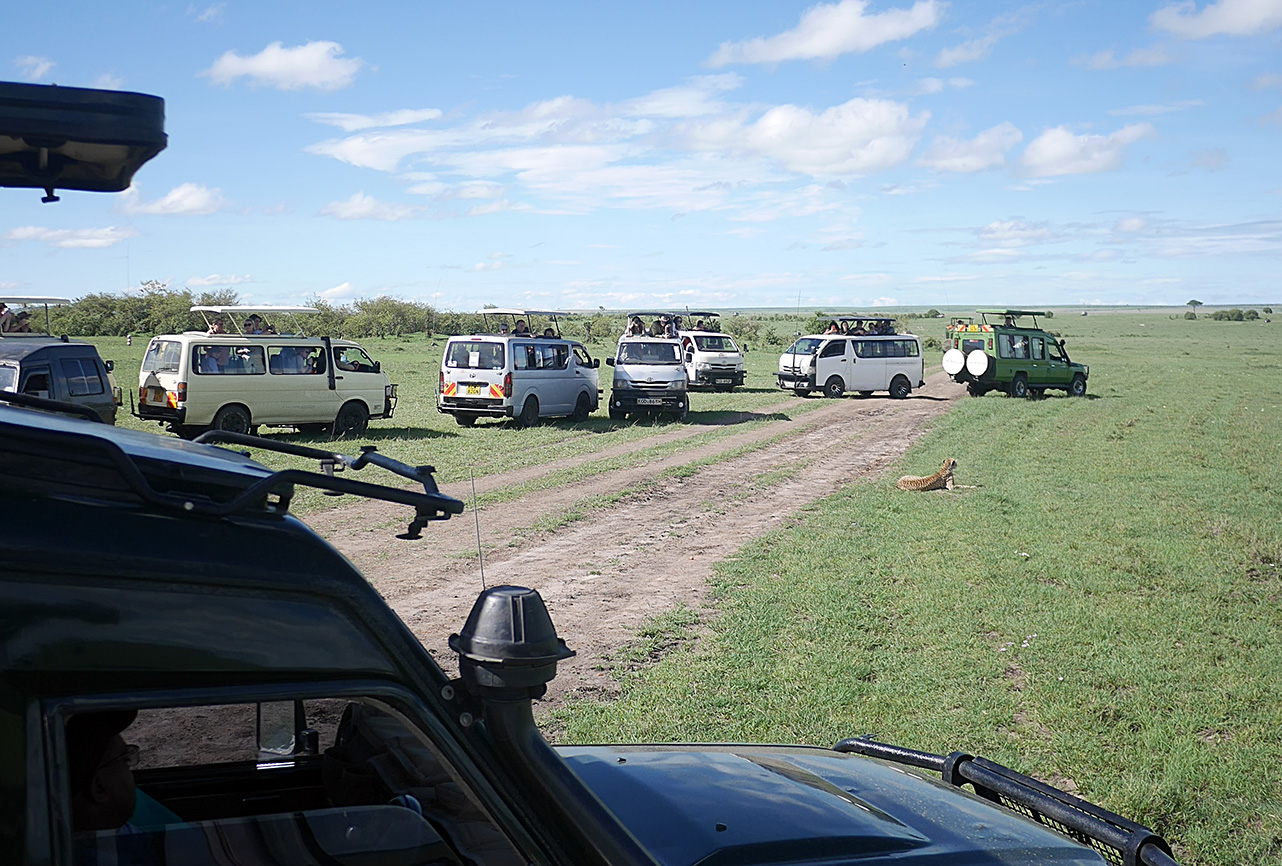
This is the ugly truth of the safari. Most predators are sleeping or resting during the day, like this lone cheetah. They tend to be active before sunrise and at dusk, when the park is closed. Safari vehicles must stay on the trails and park rangers make sure that none of them go off road chasing lion sightings into the brush. Most tourists are shooting with their smart phones which totally ruins any illusion of their lifestyle. At least with a camera and telephoto lens you can crop in tight and maintain the idea of the dignified cheetah relaxing on the savanna.
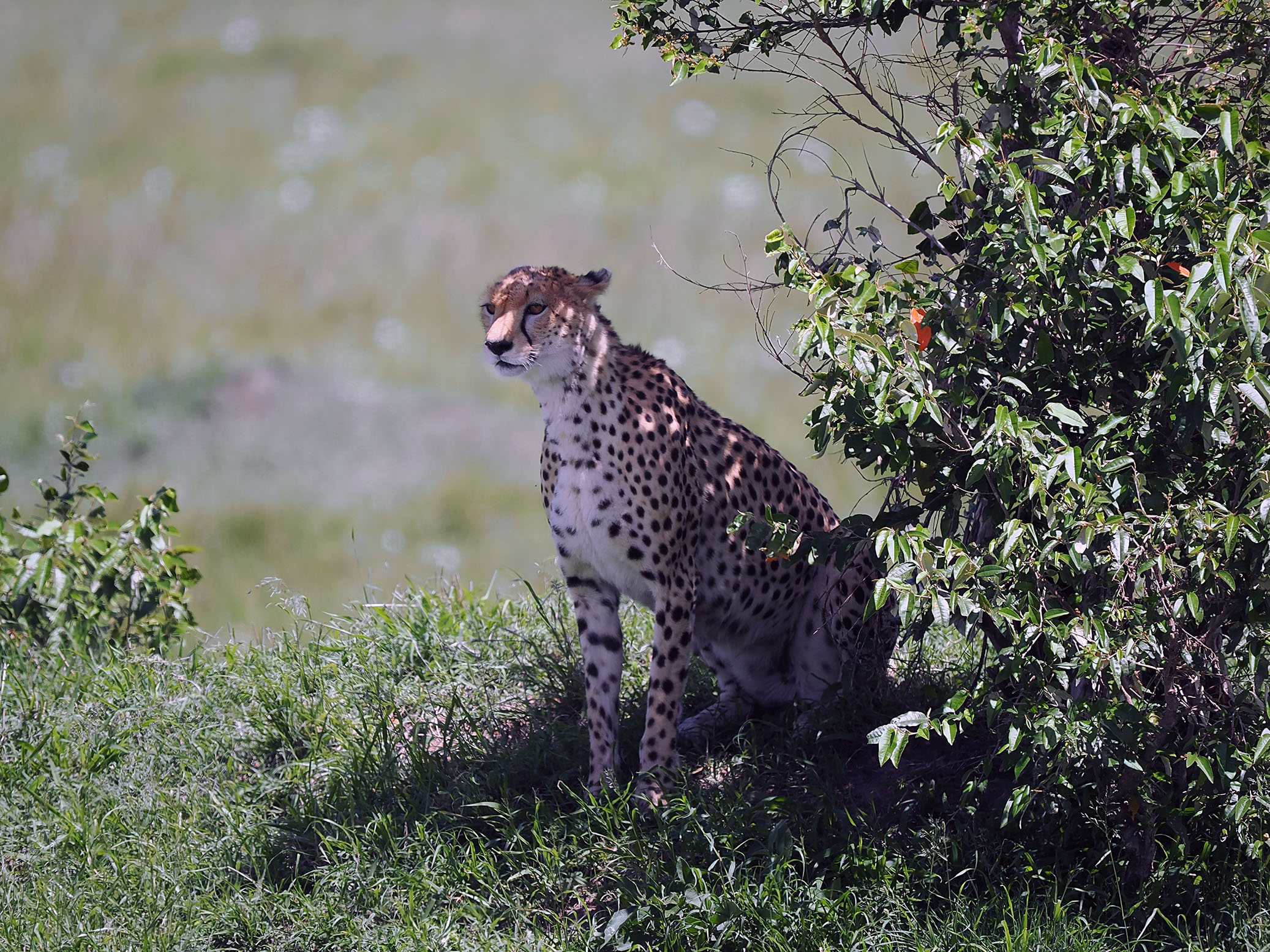
A cheetah is intently focused on stalking its prey. In reality she’s watching her litter of four cubs frolicking underneath a nearby tree.
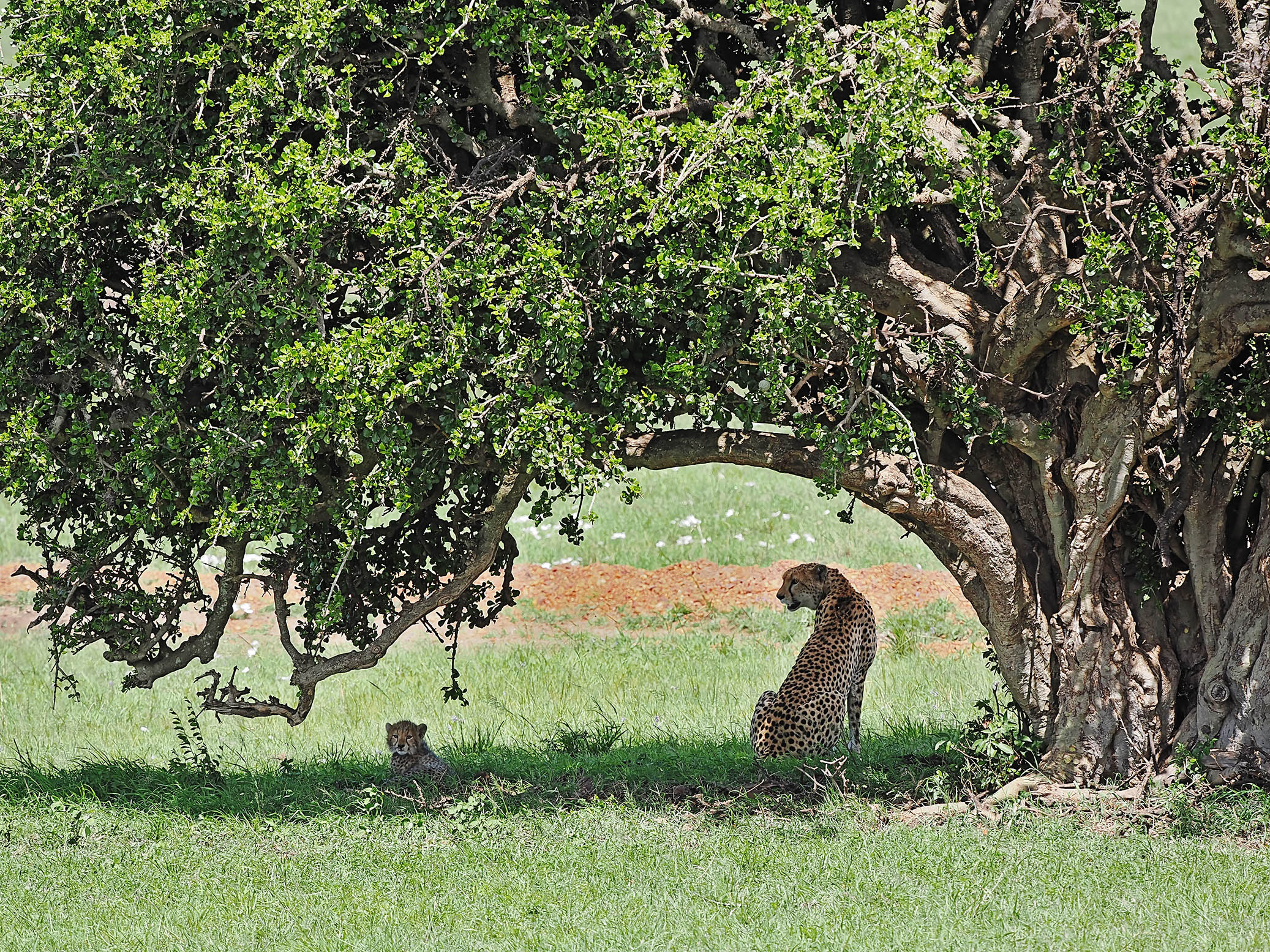
The other three cubs were much more active and curious and decided to leave the runt of the pack to his own devices. It happens in all families.
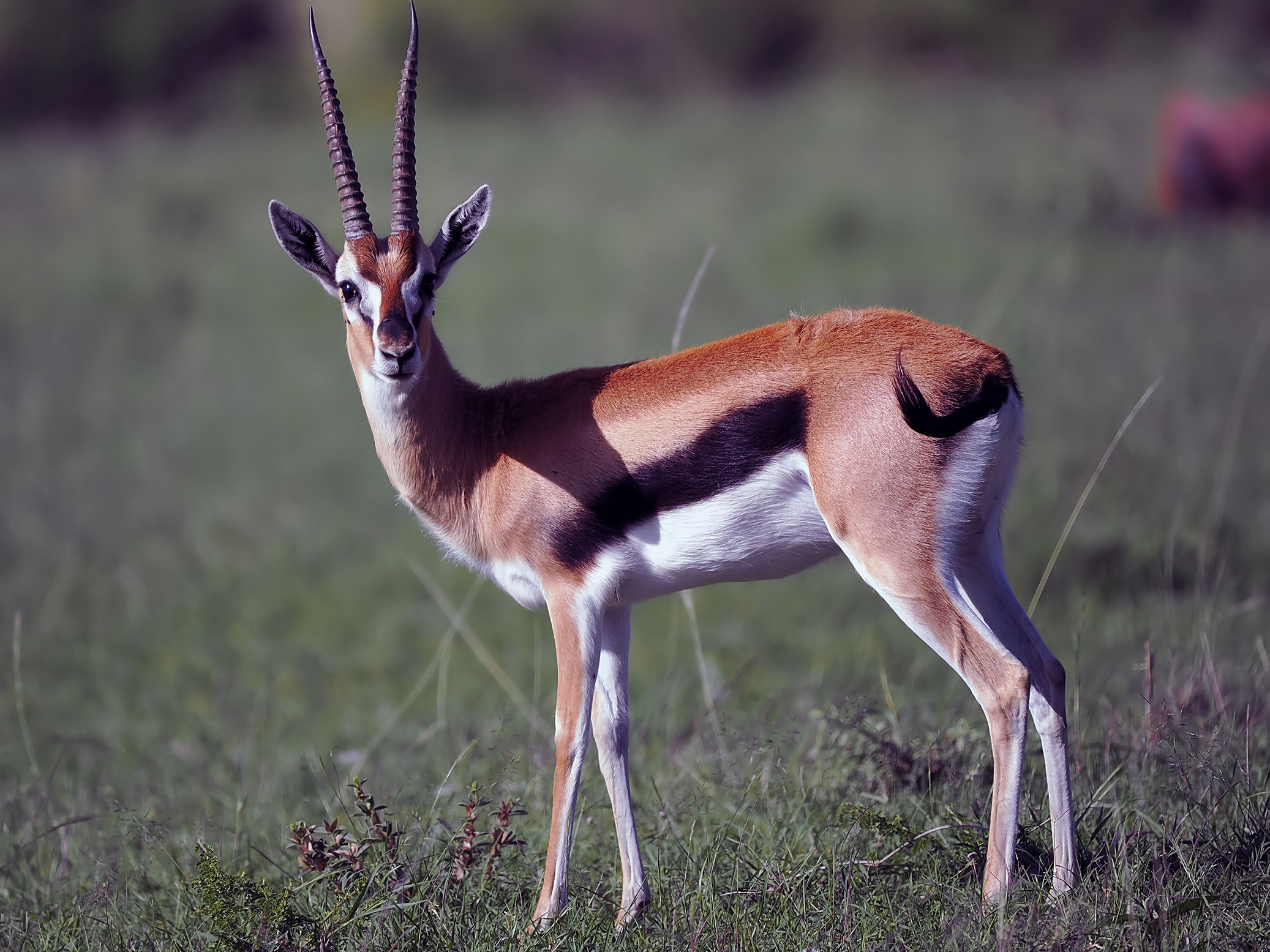
A male Thomson’s Gazelle.
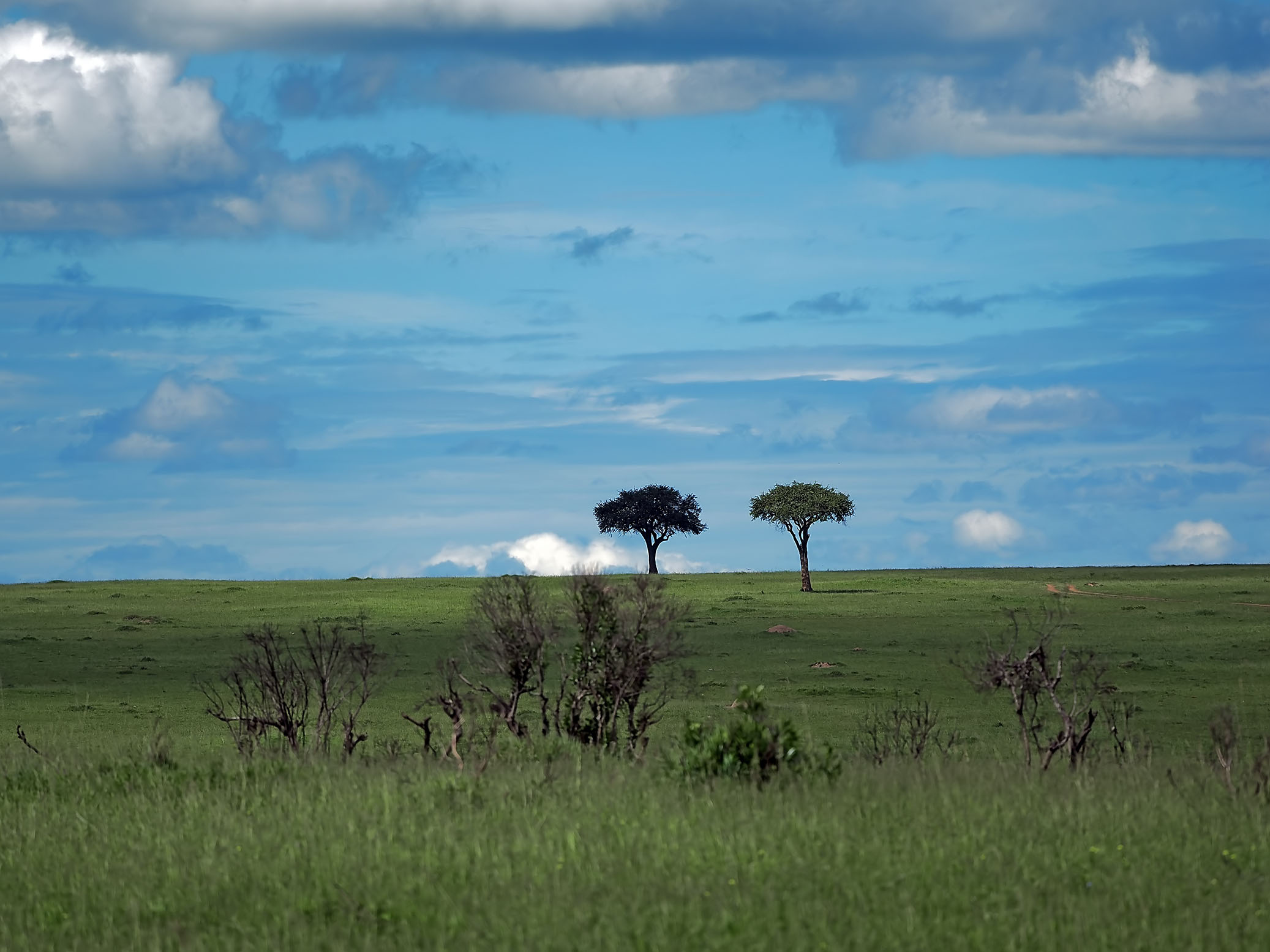
The grassy savanna. Why are there so few trees? You would expect every tree would drop seed and reproduce itself over time but the trees here are few and far between.
I was hoping to get fresh poses and this Maasai Giraffe happily complied. Otherwise all your shots start looking like postcards. There are an estimated 30k individuals alive in Kenya spending most of each day … eating.
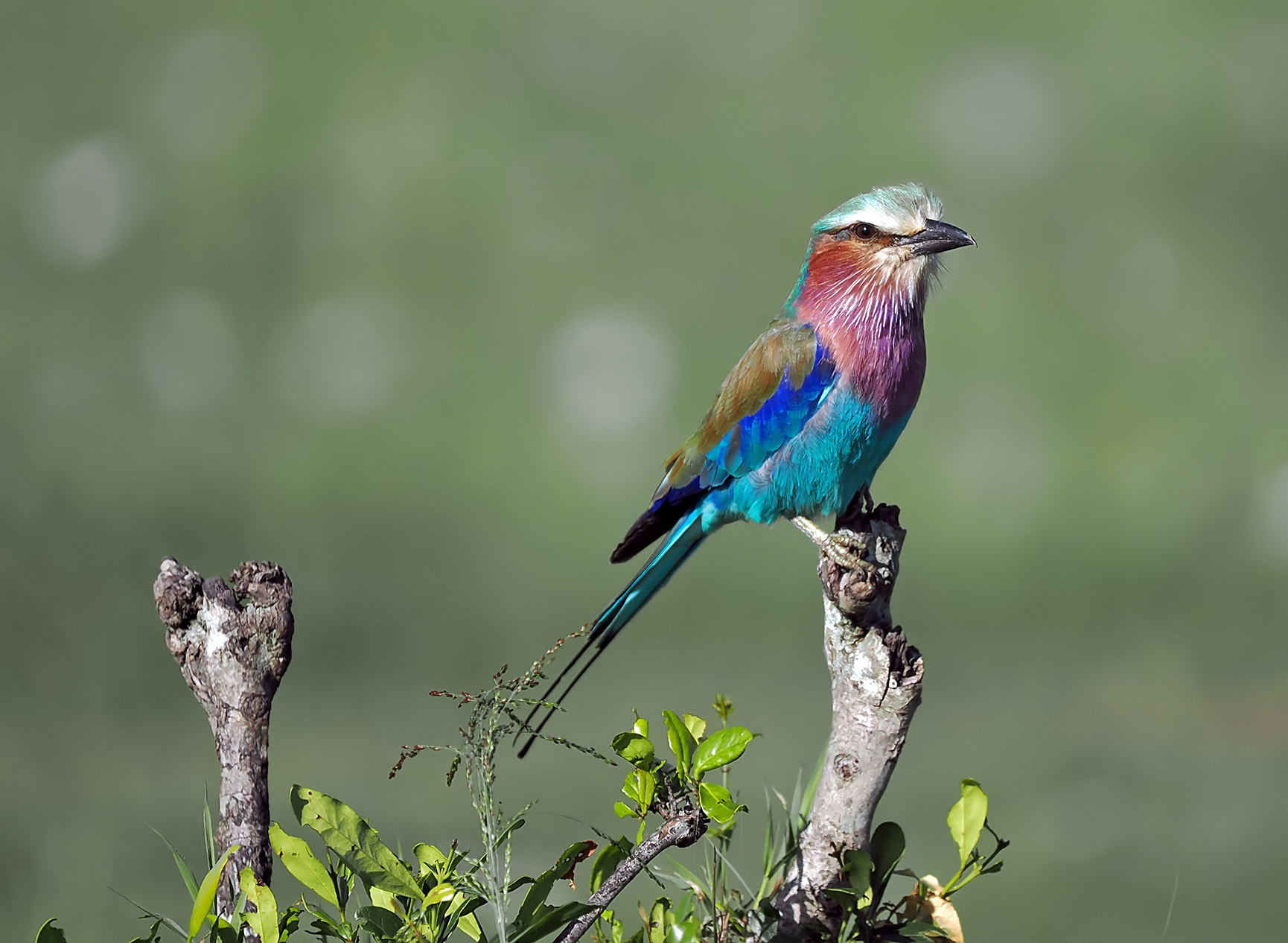
It’s the unexpected discoveries that fill you with excitement. This beautiful bird chose to land close to our stopped vehicle and my guide let me know this is Kenya’s National Bird, the Lilac Breasted Roller.
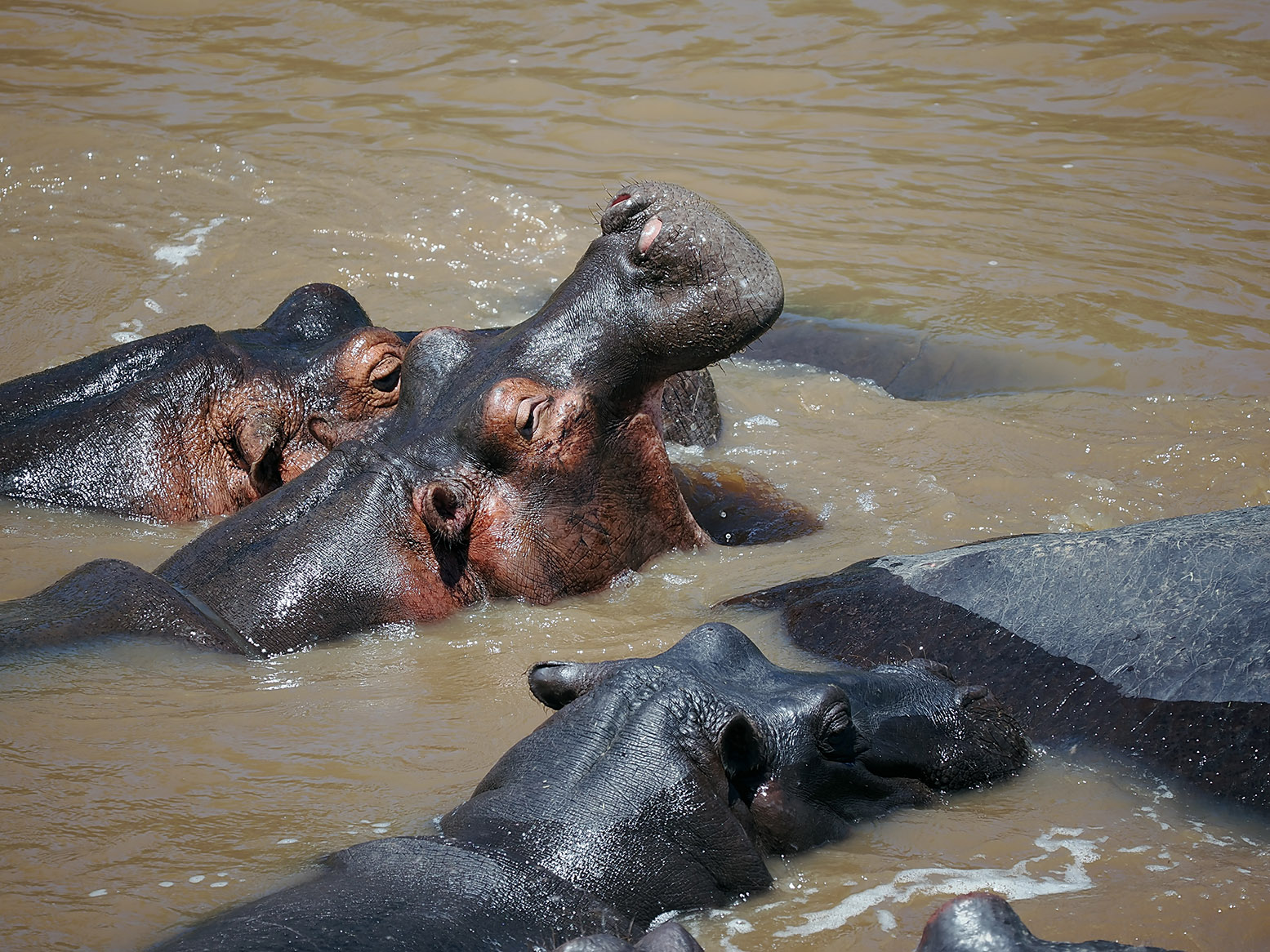
It’s a sight to see a score of hippos congregating together in a shallow river that from a distance appear to be several large and smooth river boulders. And it is true, they are one of the most dangerous man killing animals accounting for 3000 deaths annually due to their aggression defending their territory and immense size. Nile crocodiles which are also found in the reserve are equally deadly but stemming more likely from their predatory nature.
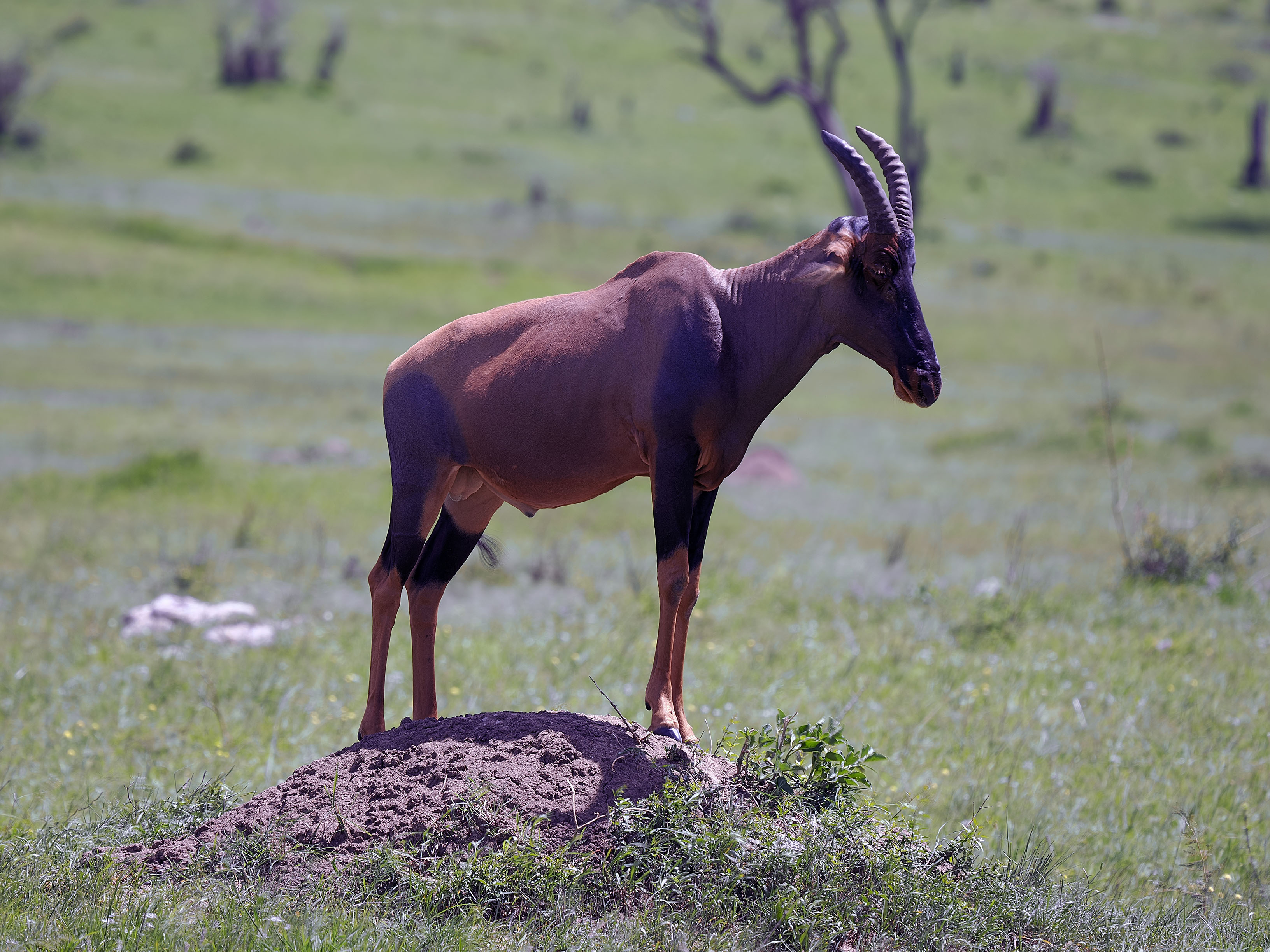
A Topi standing stationary on a termite mound. These animals can stand like this all day and in fact fall asleep doing so but he shouldn’t because he is functioning as a sentry for the herd surveying the area for danger. But the big question is, why are there so many termite mounds and where is the wood that these termites need to feed on?
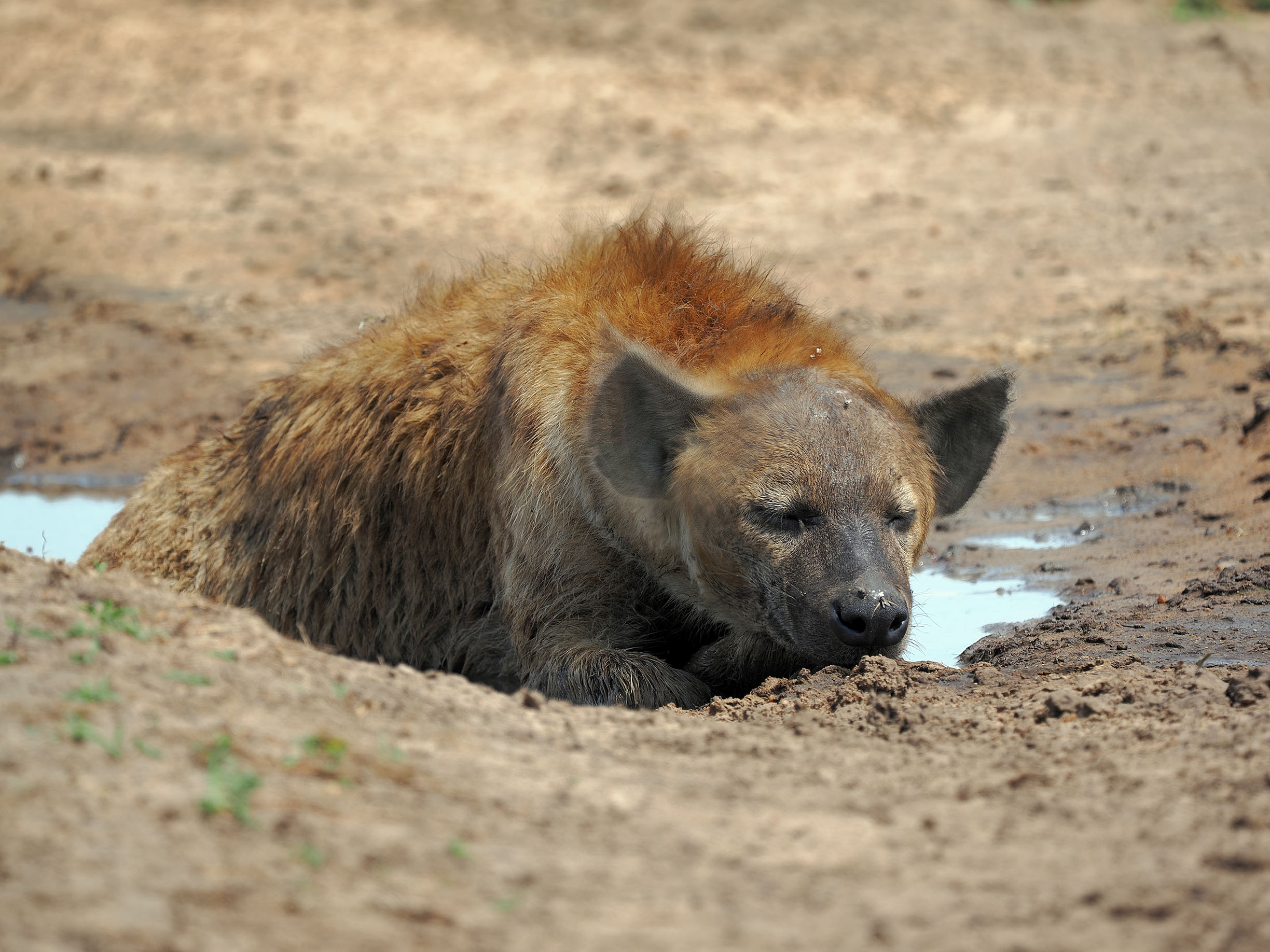
A spotted hyena cooling off in a roadside puddle.
The African Buffalo has a volatile and unpredictable nature that makes it impossible to domesticate. Even lions tend to avoid attacking them. And this aggressiveness has resulted in human fatalities.
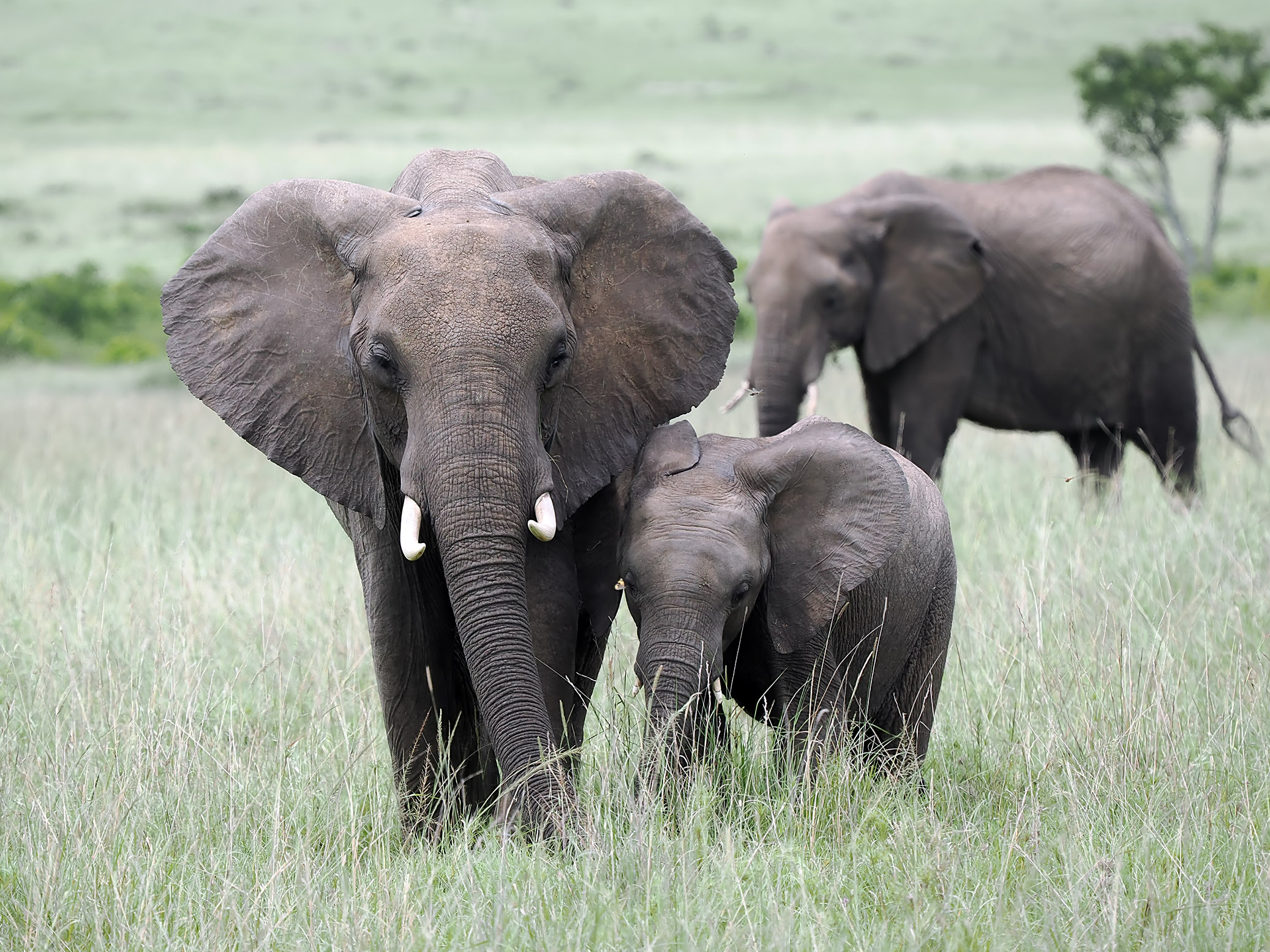
But surprisingly it is the gentle Elephant that has accounted for about 200 Kenyan deaths over the past seven years. Increasingly there are conflicts between humans and elephants as elephants invade, destroy and consume the planted crops of farmers. If the humans show aggression defending their property, the elephants will respond. Or it could be as simple as a human just being in the way and unfortunately trampled. The ongoing drought in the Horn of Africa commencing in 2020 could be the pressure pushing this interaction but that affects only the Eastern regions of Kenya. The arming of park rangers with the authority to shoot ivory poachers has reduced what was once a serious problem and elephants numbers are on the rise.
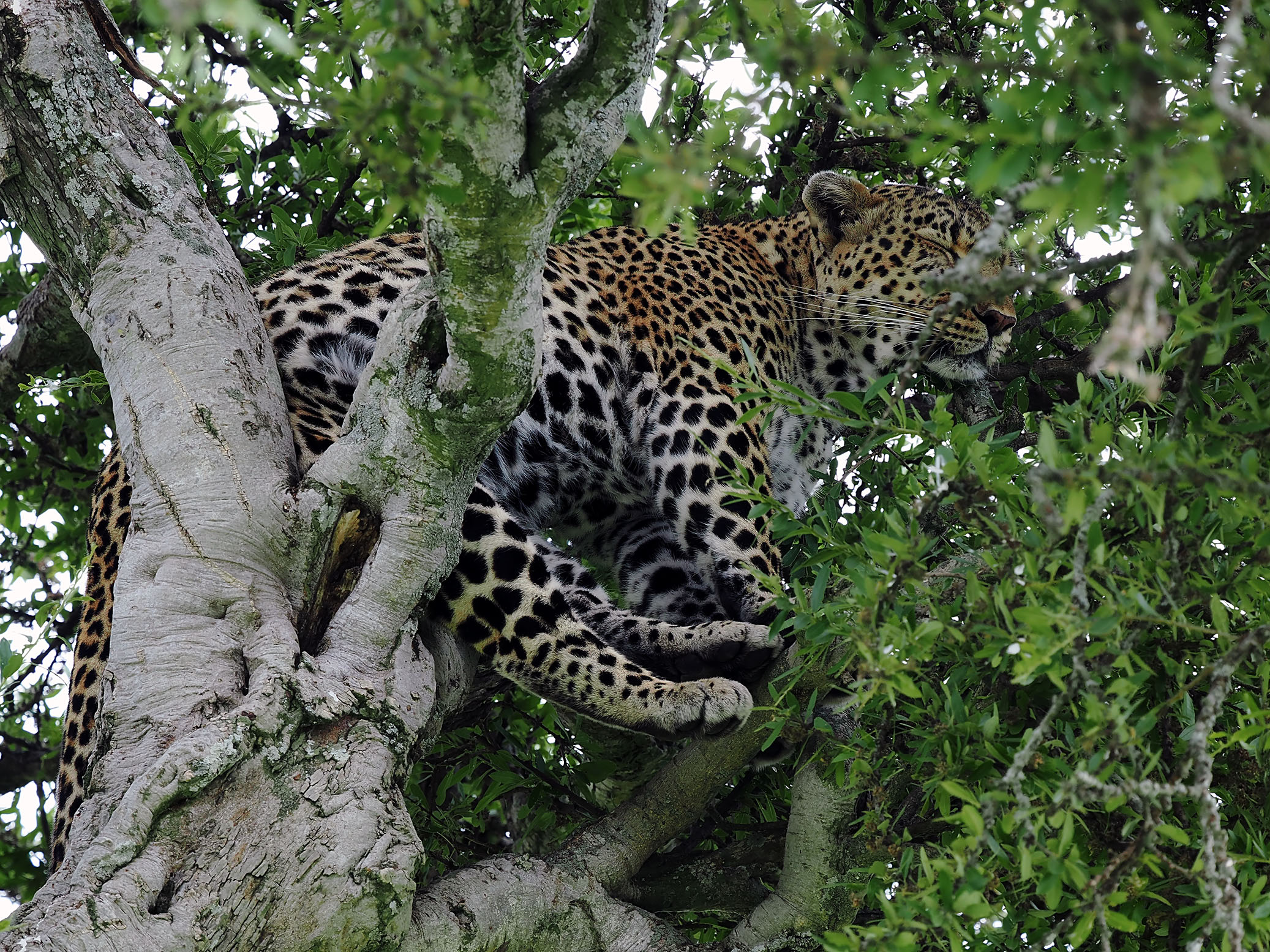
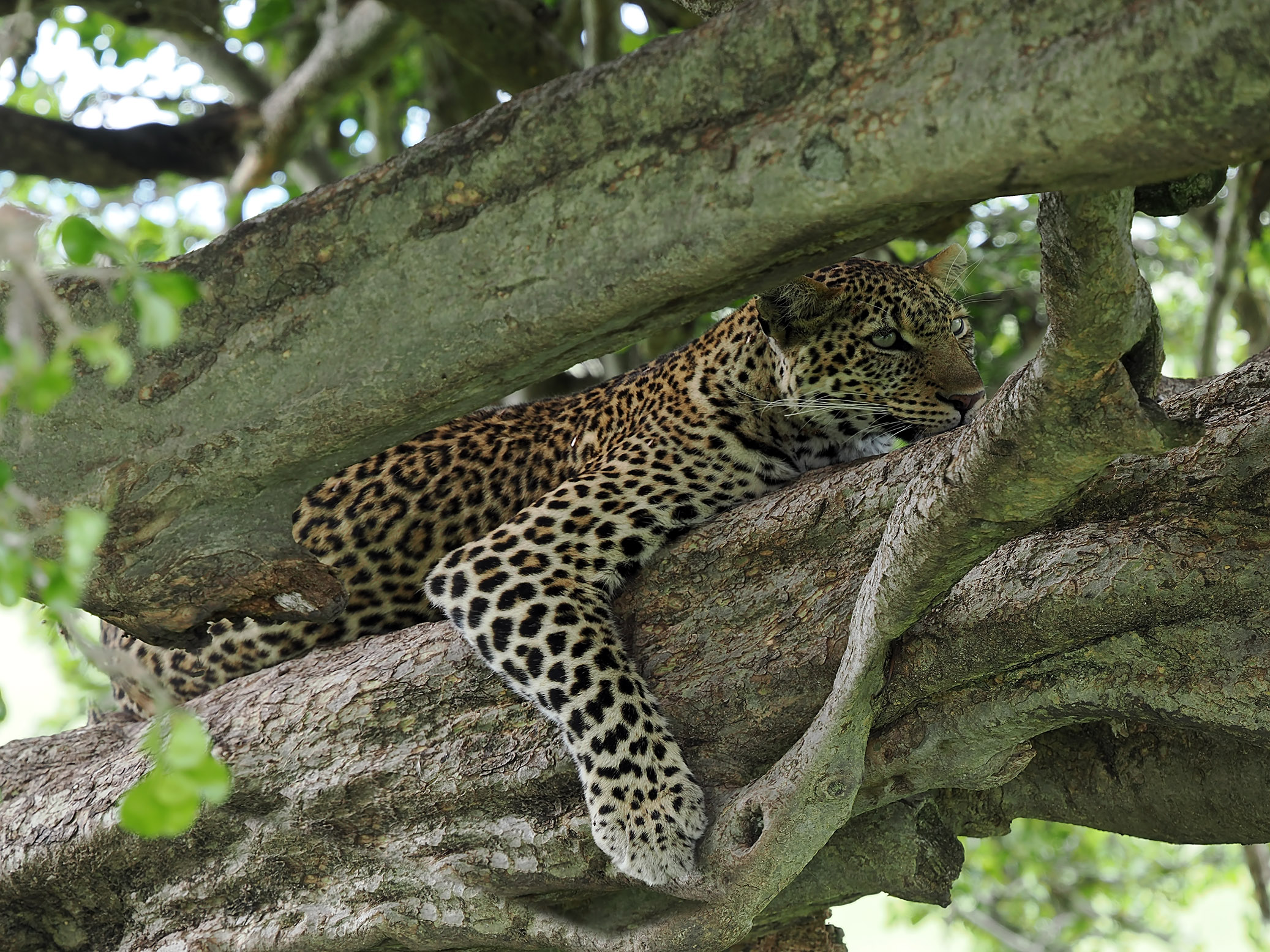
Over the radio we heard the rare sighting of a leopard sleeping in a tree. A 2018 study of over 12,000 candid leopard photos estimated a population of only 52 in the reserve, this was a truly rare opportunity. My guide had also not seen any leopard for the past 5 months.
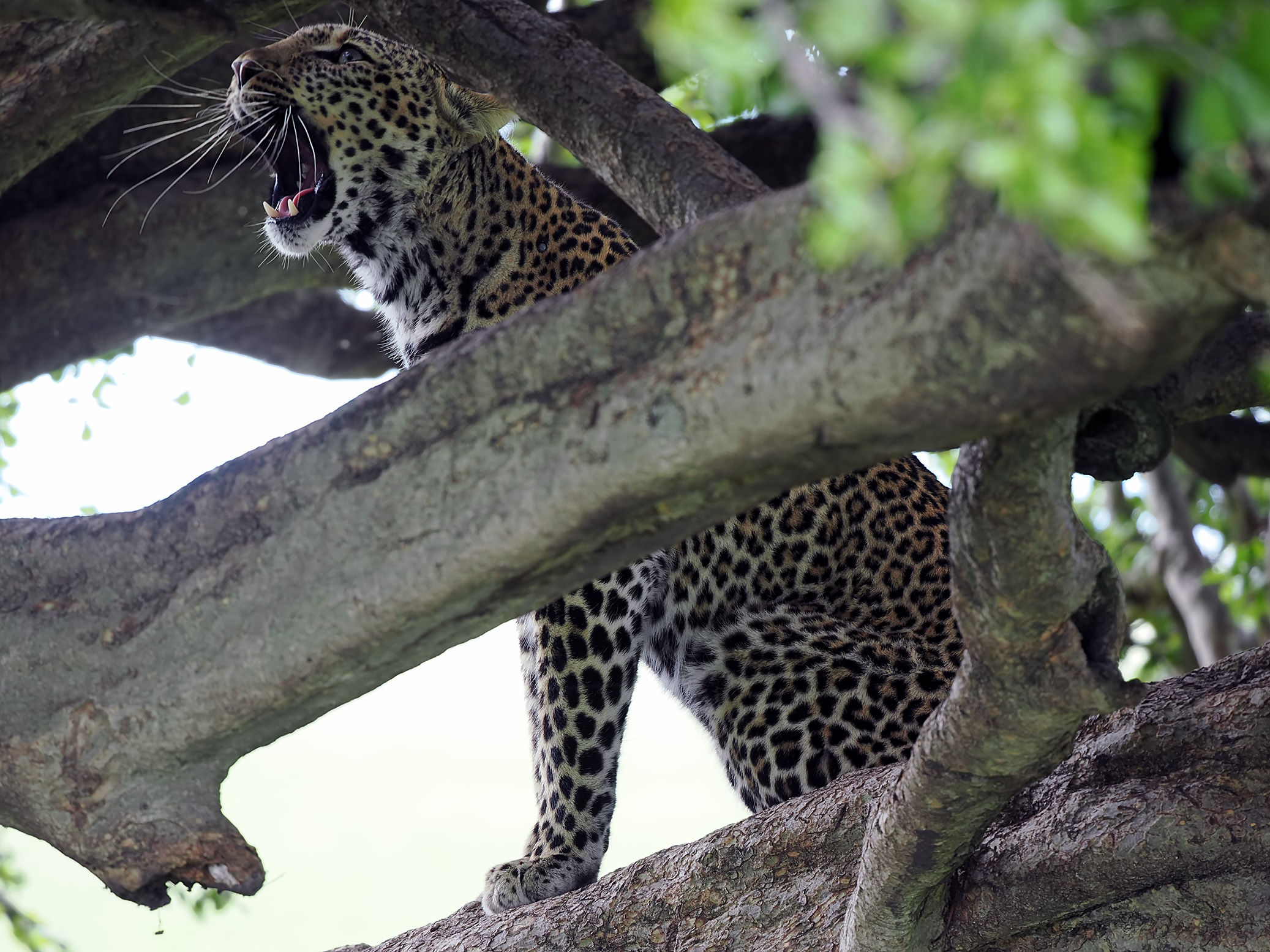
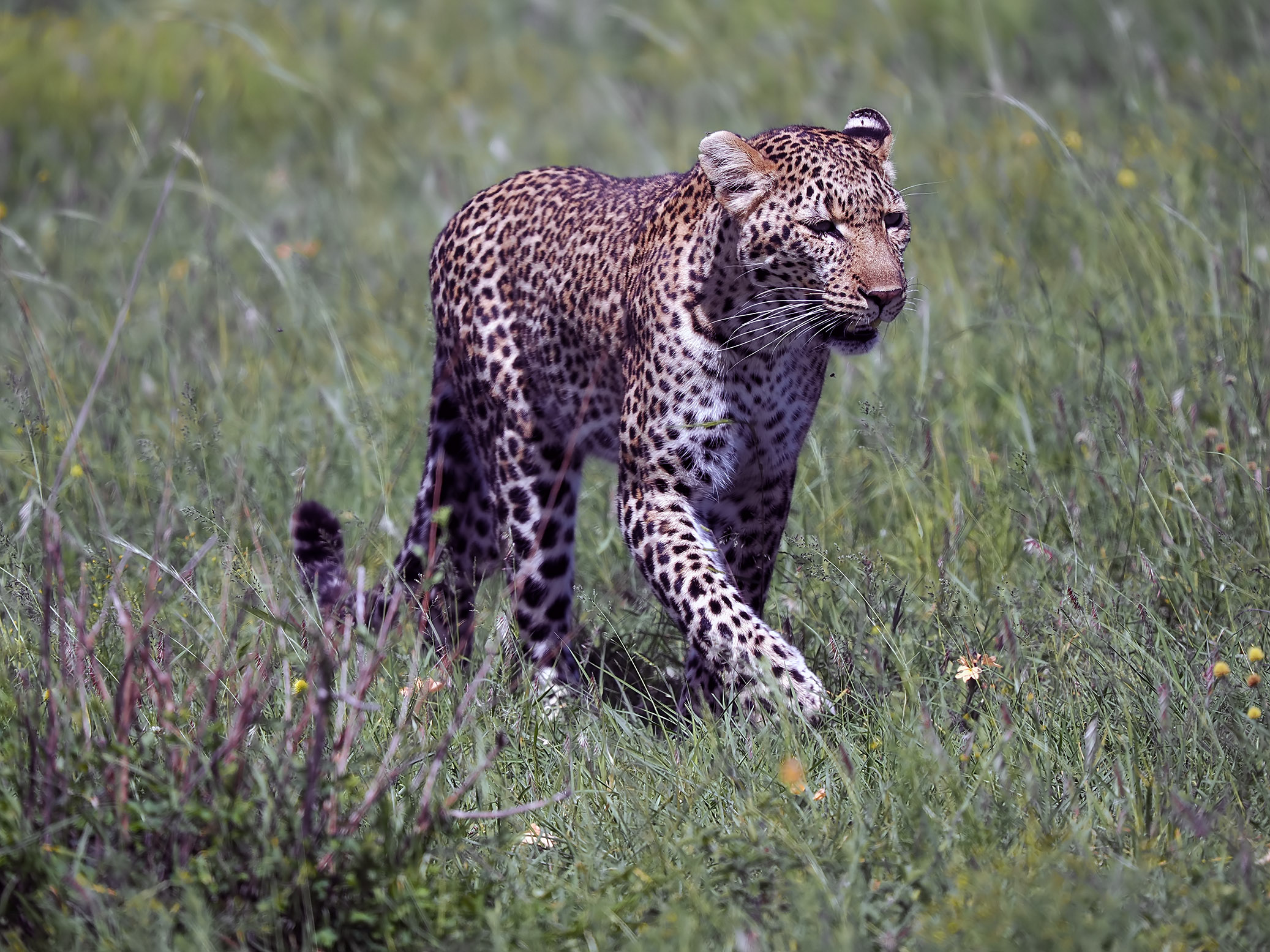
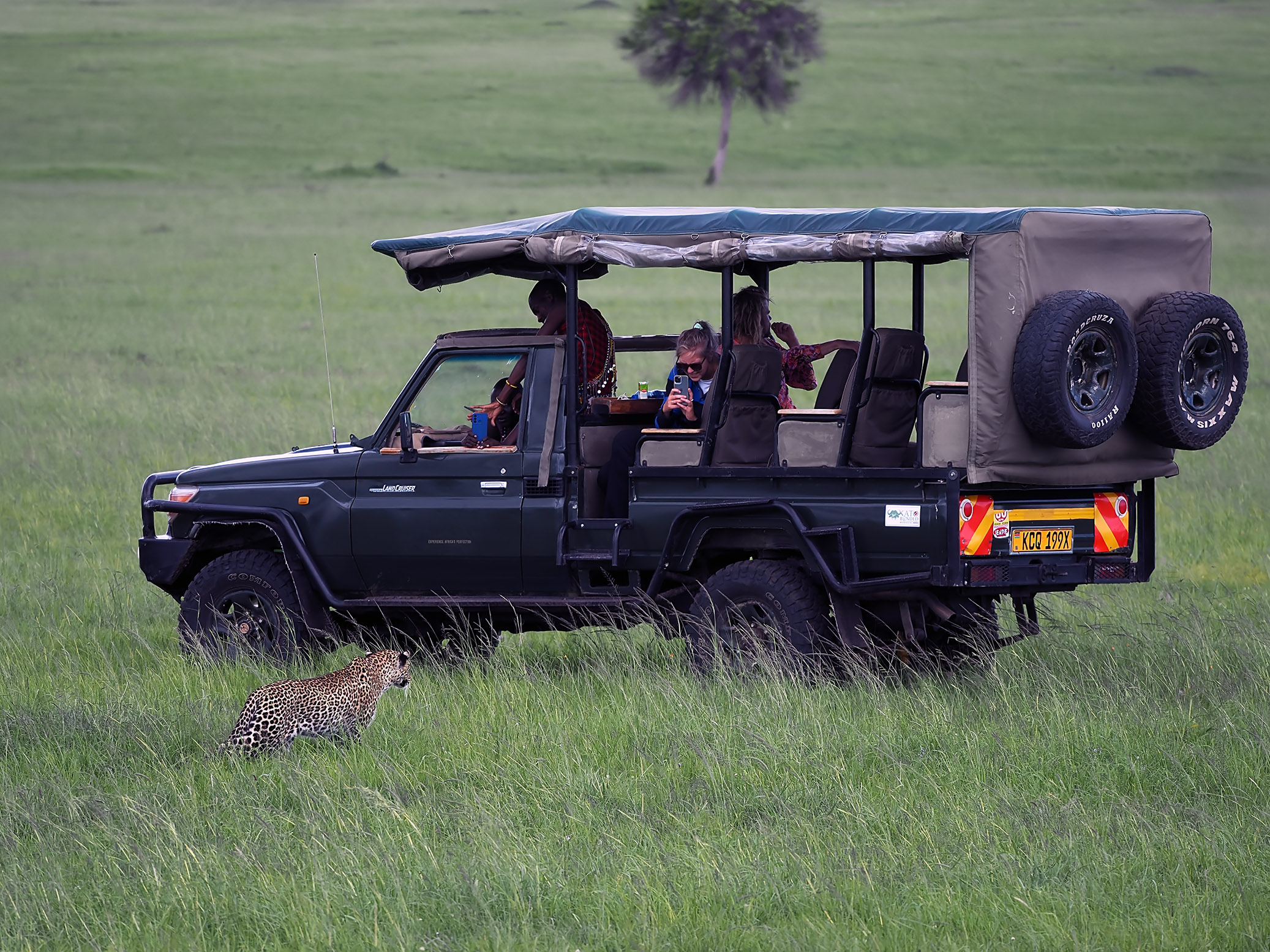
Any gambler will tell you that luck runs in streaks. A second sighting was reported about another sleeping leopard but this one was awakening. These guys have a much stronger affinity for tree dwelling than the other big cats and display their lifting strength by taking their kill carcasses treetop to be consumed there.The leopard roars. Or is he yawning. It depends on the narrative you wish to spin.The leopard begins stalking a nearby herd of topi.Or is he really stalking careless humans who don’t realize a wild predator could conceivably jump into the open car?
Thanks for reading a brief accounting of my Kenyan Safari showcasing the photographic capabilities of the micro four thirds (m43) camera system. If you want to see more images or pixel peep the ones in this blog please visit: https://jimchung.smugmug.com/2023-Kenya-Safari/
Make sure to expand the window to full screen and hit (i) for embedded comments to explain the image.
.
.
.
You can press [Home] at the top of the screen for a full list of topics in this blog.
I have degrees in Biochemistry and Dentistry and practice clinically 2 days a week. The rest of the week I devote to photography and bringing you the very best writing in this blog.
View all posts by jimchungblog







 Jim Chung's Ramblings