


It is a little shocking that while we approach the 80th anniversary of the end of WW2, there are still documents that remain classified. Some documents reflect events that may prove embarrassing to the Allies – like the confirmation of Allied POWs killed in evil human experiments performed by the odious Imperial Japanese biological warfare Unit 731, or the complicity of the Royal Family in seeking a peace treaty with Hitler. Others like aspects of the Manhattan Project and the ULTRA and MAGIC decryptions remain sealed because the technical details continue to be relevant to current technology. And still others protect the tradecraft and identities of agents who may still be alive that took part in SOE and OSS missions.
At the onset of war, Canada purloined electrical engineering graduates and even promising high school graduates to enroll in a top secret British Royal Air Force radar training school in Clinton, Ontario. Many high school graduates had entered an intensive six month, 1,500 hour Radio Technician’s Course that was operated out of the Ottawa Technical High School. By attending classes daily from midnight to 8 AM and Saturdays, the graduates would be getting training equivalent to a four year University degree at a highly condensed and accelerated pace.
Ringed by barbed wire, the Clinton school was known as Canada No 31 Radio School and opened in August 1941 on Norman Tyndall’s farm. Students graduated after a 12 week course. RADAR technology had been pioneered by the British and would become an extremely essential component to winning the war.
Japan did not prioritize placing radar on all their naval ships and chose to refine their targeting optics which have no value at night or under inclement weather. As a result they were years behind in technology and implementation while fighting in the Pacific, a vast battleground where the advantages of radar are immediately realized.
Security was tight at the school and students were not even permitted to write notes, all information had to be committed to memory. So serious was the program that the first graduating class was made up entirely of US Navy and Army personnel. By the end of the war, 6500 Canadians and 2300 Americans had been trained to be radar technicians or operators producing 250 graduates per month. Canada lent the RAF approximately 5000 highly skilled radar technicians, many who flew on patrols over the Atlantic Ocean to detect and sink German submarines. With the critical manpower shortage met in Europe, the RCAF took over command of the school and renamed it No. 5 Radio School.
Research Enterprises Ltd was created in Scarborough to manufacture ground and airborne radar units based on British designs but modified to use components readily available in Canada and the US. Together with the National Research Council, the two teams developed and manufactured radar for Canadian, American and British requirements.
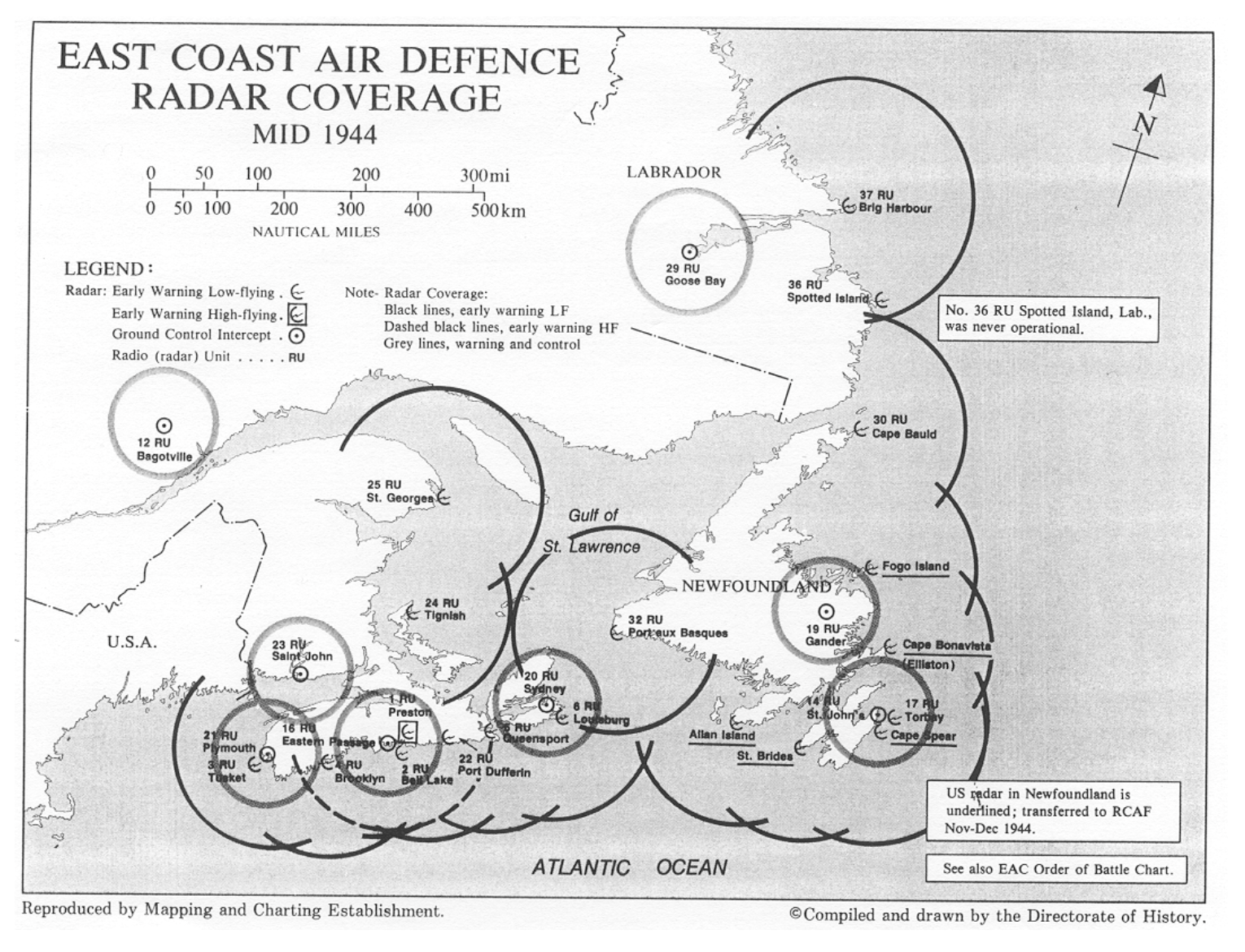
As the war in Europe ended, Canada repatriated these men back into the RCAF and were determined that they would fight as an independent force in the Pacific. The Brits instantly lost 35% of their radar technicians and the haemorrhage was so devastating to their operational abilities that senior RAF officers tried to bribe departing non-coms permanent commissions in the RAF. But when the war in the Pacific also abruptly ended, the Canadian government decided that all activities of the Secret 5000 were to remain classified for a hundred years. What possibly could be so important?
By the end of the war, Canada had taken over the entire responsibility of Atlantic Convoy escort duties with the largest involving 166 ships departing Halifax shortly after D-Day. Were innovations in submerged sub detection by aircraft developed that needed to be kept secret? Something that was still valid in detecting Soviet subs that soon became the foe in the closely following Cold War. We will have to wait until 2045.

 Jim Chung's Ramblings