Using the AstrHori 18mm f/8 probe lens

I think most of us remember when Venus Optics introduced the Laowa 24mm f/14 macro probe lens in 2018 for full frame sensors.  It had that weirdly strange form factor reminiscent of a broom handle and I wondered who exactly is going to buy and use that?  Well apparently a lot of cinematographers did because you can place this waterproof, self illuminated lens in places that normal lens simply cannot fit leaving audiences wondering how that clip was even possible.

Venus Optics modified their lens to a new modular design and introduced a new 90° periscope tip lens that gave cinematographers even greater freedom.
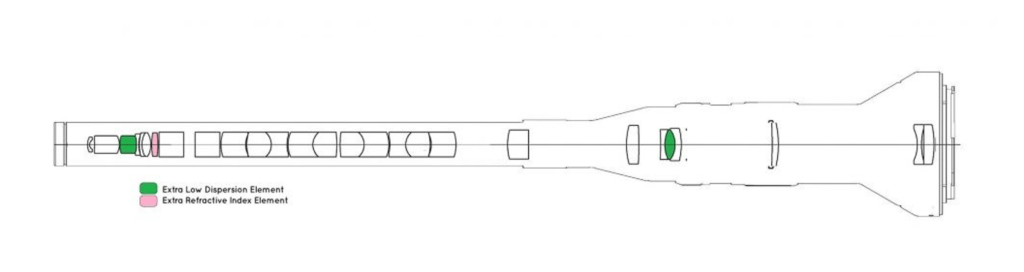
As expected, this is a compound relay lens made of 27 elements in 19 groups with two extra low dispersion elements and one element of high refractive index.

Two years ago, and completely escaping my attention, a new Shenzhen optical company introduced a very similar product but taking advantage of the smaller image circle of the APS sensor produced an 18mm f/8 macro probe lens.  The AstrHori lens likely follows a similar optical prescription with 23 elements in 17 groups with an identical minimum focusing distance of only 5 mm.  Reviews indicated that the AstrHori product was sharper than the Laowa lens and likely with even sharper corners when used on the smaller m43 sensor.  But most striking was that the AstrHori lens was easily half the price of the Laowa lens.  I purchased mine brand new for only $650 USD.

Underwater wildlife photos are possible using the lens’ built in LED lights powered by a USB source.

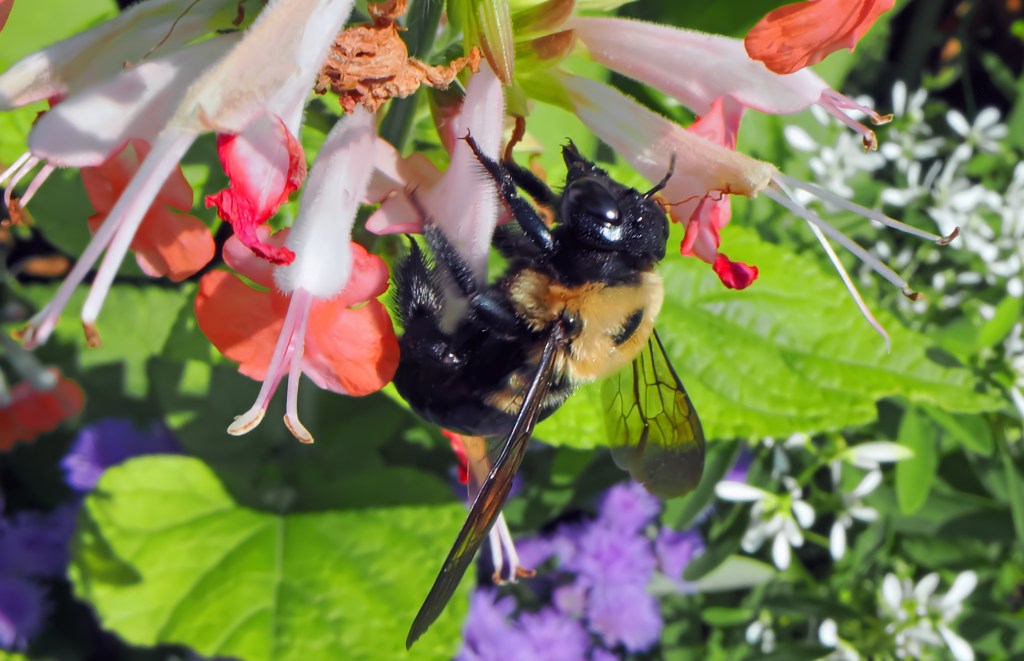
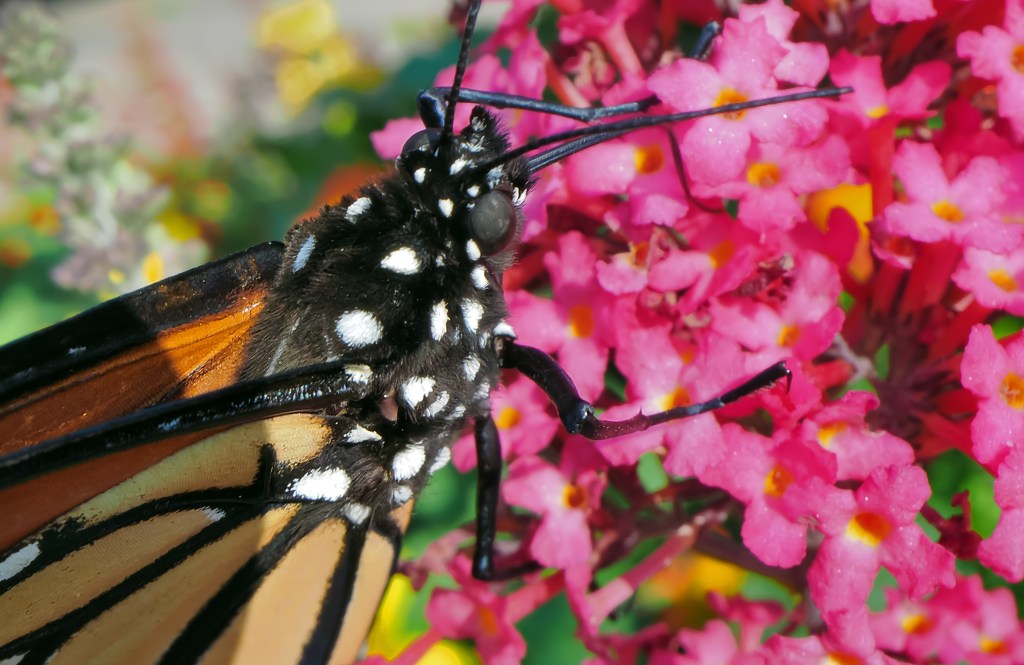
White Cabbage butterfly, unknown Honey Bee, Red Admiral butterfly and Monarch butterfly. It is easy to obtain any where from 1:1 to 2:1 macro image scale as the lens casts a small shadow and seems less threatening than the camera body or photographer itself.  All images taken at the maximum f/24 aperture to ensure depth of focus as visually confirmed focus is difficult with the small OM-1 screen.
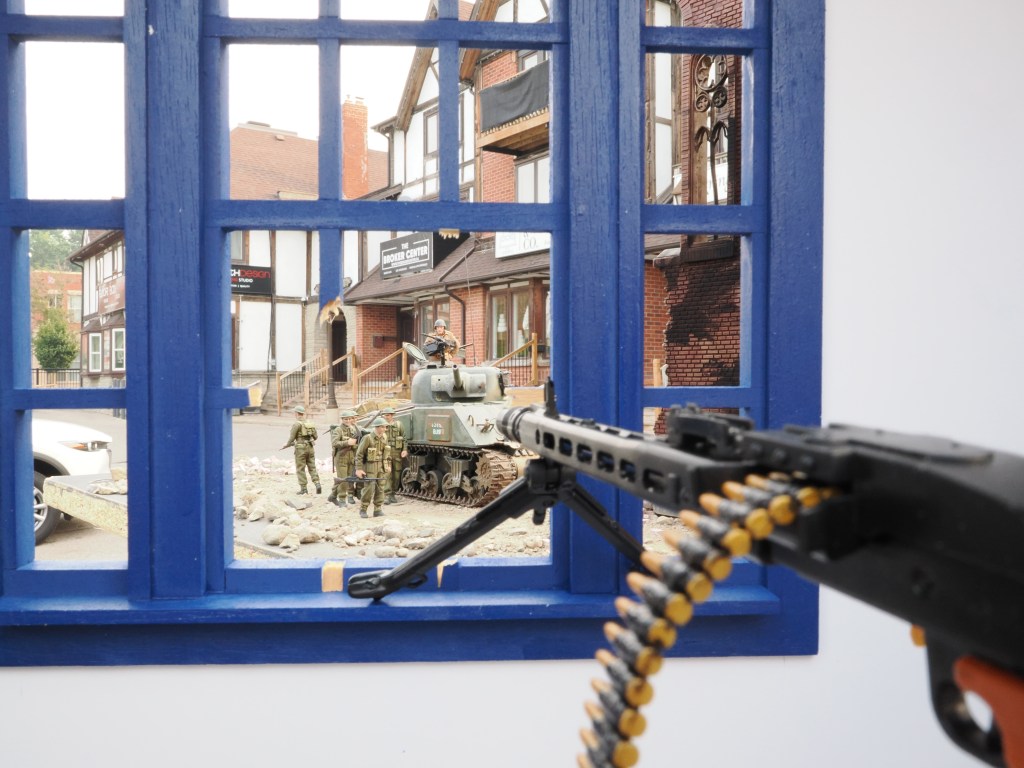
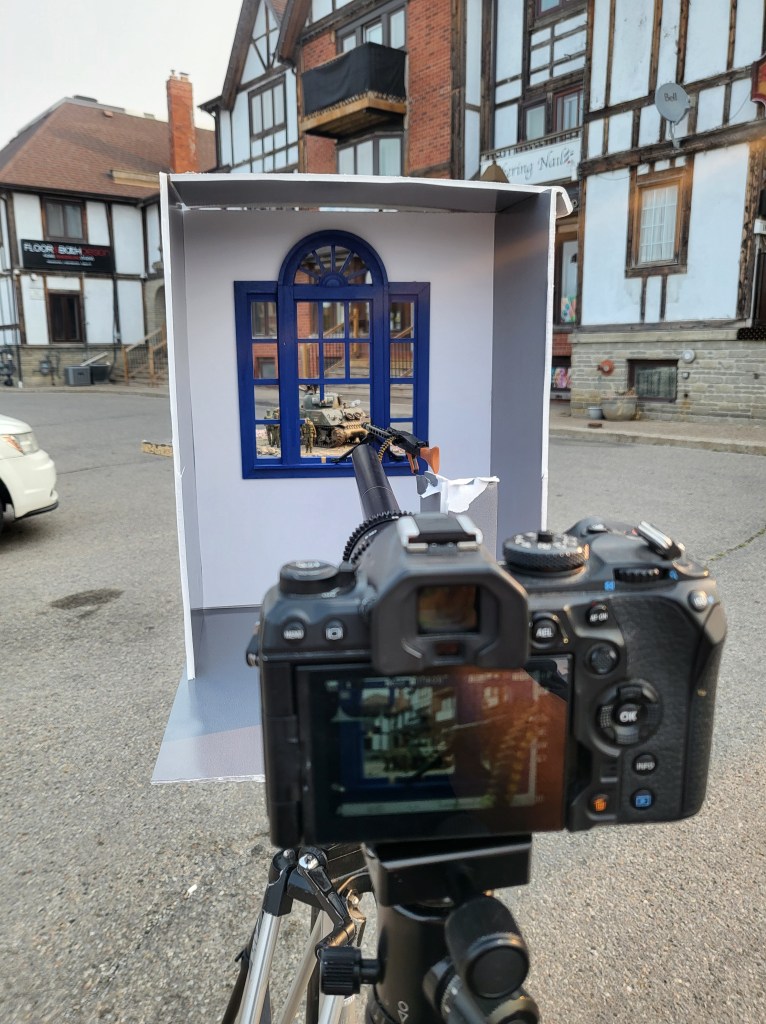
This is my dual forced perspective project featuring the only surviving Canadian Sherman Tank of WW2. “Bomb” of the Sherbrooke Fusiliers is encountering German resistance while clearing a French town in Normandy during August 1944. Taken with the Leica 15mm f/1.7 lens.
This lens is also well suited for scale model diorama projects because of its much smaller minimum focusing distance (than a typical nonmacro lens) which allows you to physically penetrate deeper into the diorama to give an immersive POV.

An American Toad and a Green Frog, both at 2x scale. Don’t forget to enter the focal length of the lens so that the sensor stabilization works correctly. The spot in the menu has changed for the OM-1 and you have to create individual MF Lenses and check mark the one in current use under the Wrench Icon and under heading Lens Info Settings.   It is a viable macro wildlife lens.

Click [Home] on the top of the screen to get an entire list of blog topics to read.  You can also zoom in to increase the size of the images until they occupy the entire width of your screen.

Leave a comment