

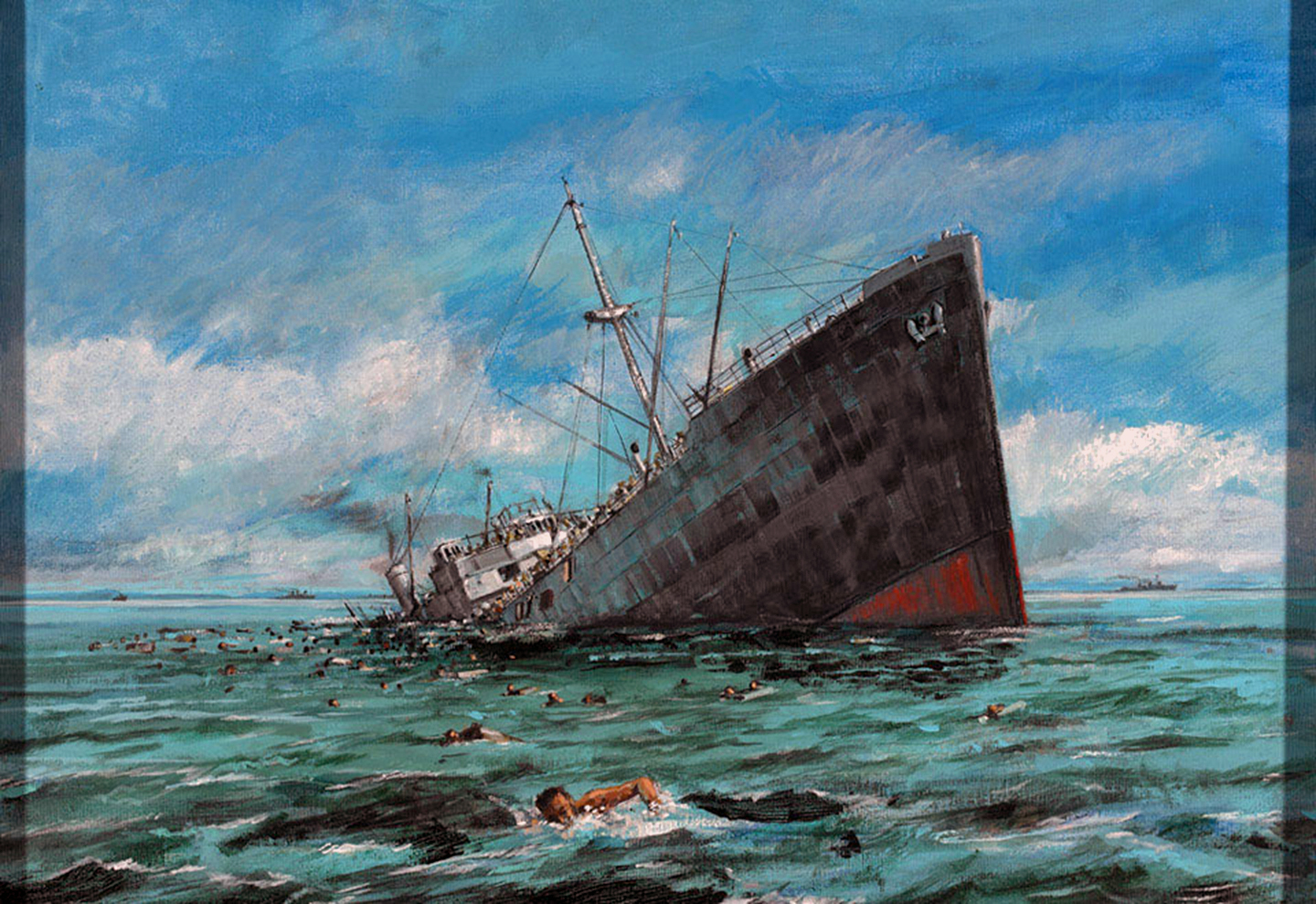
I’m hoping to complete this writing in time for Remembrance Day 2025, only two days away, so that we could include the memory of those who needlessly died aboard the sinking of the Lisbon Maru during the Pacific War of WW2. There was likely only a handful of Canadians involved, but by the whim of a random administrative decision, the ship could have been full of Canadians. More importantly, how does a little known event of WW2 remain relevant today some 83 years later.
Despite the war being well underway in Europe against Nazi Germany and Fascist Italy, the Western Allies did not seem to take Japanese hostilities as seriously. I think there was a degree of racism at play. Imperial Japan was grossly underestimated despite facts that are obvious in historical hindsight. Her armies had been fighting in China for years and were battle hardened. Japan alone understood the importance of air power in fighting over the enormous stretches of the Pacific Ocean and how different this war would be from the Great War. The US imposed crippling trade sanctions against Imperial Japan believing this would force the nation to back down as its oil imports were cut off. Imperial Japan swept over the Pacific in an unstoppable wave in the first year and conquered every European and American held territory and most importantly the oil fields of Indonesia. Canada and Britain had been waiting with quiet desperation for the US to enter the war, but as we see reflected even today there is a large segment of the US who favour fascism and isolationism. The US only declared war on Japan. Three days later, Germany then declared war on the US in unity with its Japanese brothers. In a fait accompli, the US Congress finally voted to declare war on Germany.
Canada was as guilty as the Brits in dismissing the Japanese threat. We sent two green and under equipped infantry battalions to aid in the defence of Hong Kong, the Royal Rifles of Canada and the Winnipeg Grenadiers. The entire garrison surrendered on Christmas Day in 1941 after holding out for only two weeks. They were strung together by wire and marched off to POW camps. Any men who fell to the ground and were not able to rise were removed from the line, bayoneted and thrown off the cliff by the Japanese. Why did the Japanese treat prisoners so poorly as we shall see even later in the story? Fascism undervalues the lives of all men and brutality was a way of life in the Japanese Imperial Army. The highly trained and elite members of the Air Force and Navy behaved better in this regard as their units demanded greater professionalism but in the example of the Lisbon Maru even their conduct was found severely wanting.
The POWs were split into three groups with the Canadians and Royal Naval personnel at North Point on Hong Kong Island, the Indian regulars at Ma Tau Chung in Kowloon and the Brits at Sham Shui Po in Kowloon. Poor nutrition and unhygienic conditions meant that dysentery, pneumonia and diphtheria became rampant at the camps.
Two thousand fit men from Sham Shui Po were needed to serve as slave labour on the Japanese home islands and the freighter Lisbon Maru would transport them. She was already laden with 1700 tons of metal ore bound for Osaka and 32 tons of five inch shells for Tokyo and the chosen British personnel found new homes in three holds of the ship were space was so limited that men had to take turns lying down to sleep. This only exacerbated the pain for those who suffered from beri beri, which is a condition caused directly from a Vitamin A deficiency resulting in severe feet pain. The Lisbon Maru set sail on September 26, 1942 after taking on 800 Japanese soldiers who occupied the upper decks of the largest hold.
On the night of September 30th, the Gato class submarine USS Grouper, was on patrol 100 miles east of Shanghai and spotted the Lisbon Maru steaming north. The bright illumination of the full moon prevented Grouper from closing the range without being seen so she conducted an end run by speeding well ahead of the Lisbon Maru and submerged, waiting for the prey to come to her. To the submarine commander, the Lisbon Maru was a conventional target with her decks covered by Japanese soldiers.
At dawn on October 1st, the Grouper launched three torpedoes at a range of 3200 yards running at a depth of 10 feet. No hits were scored and the sub commander believed the torpedoes had run too deep. In reality two had missed but one had scored a direct hit but failed to detonate, a common problem early in the war with the American Mark 14 torpedo. By comparison, the Japanese Type 93 torpedo functioned flawlessly with an incredible range of 40 km and delivering a much larger explosive warhead. Its technology was closely guarded during the war as the secret to its speed and range was that it was designed to run on pure oxygen burning kerosene in its motor.
The Lisbon Maru lookouts had actually detected the torpedo attack and had evaded two of the torpedoes. A fourth torpedo was launched running on the surface and struck the stern of the Lisbon Maru blowing a 3 meter wide hole. As water flooded into the engine room, the ship shuddered to a halt and the lights went out. A fifth torpedo was launched and observed by the Lisbon Maru crew to travel directly under the keel. Grouper fired a 6th torpedo set for surface running and crashed dived after spotting a Japanese light bomber starting an attack run. They heard an explosion but remarkably it had been the 18 pounder deck gun mounted at the bow of the Lisbon Maru that had expertly hit and detonated the incoming torpedo. A Japanese destroyer and several auxiliary ships arrived and began searching for the submerged Grouper.
Fortunately, the Lisbon Maru would take more than a day to actually sink but meanwhile the Japanese had secured all hatches and covered them with tarpaulin leaving the POWs in the dark. Aside from a four man pump that they had tossed down the hold, the men now had no food, no fresh water and no access to the latrines. The dysentery forced the men to foul the rising water in the hold and the stagnant air grew hot and thick. More than 10 Japanese vessels had appeared on the scene and the soldiers were all evacuated off the Lisbon Maru leaving only the crew and a token force of 25 men to guard the POWs. They began to tow the stricken Lisbon Maru west while the POWs began communicating with each other in the different holds by tapping Morse code on the bulkheads. By 1 AM the next day, men began dying.
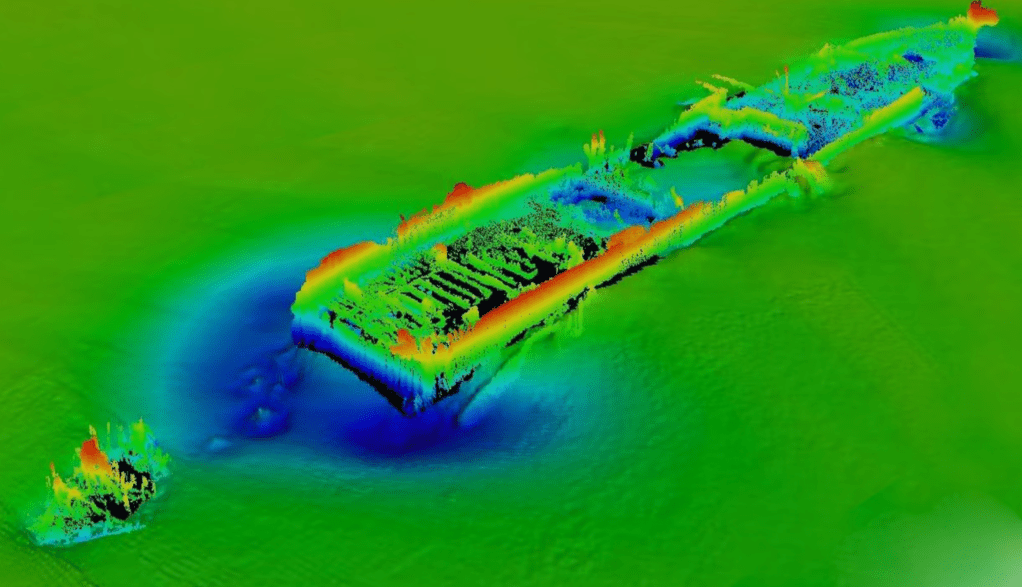
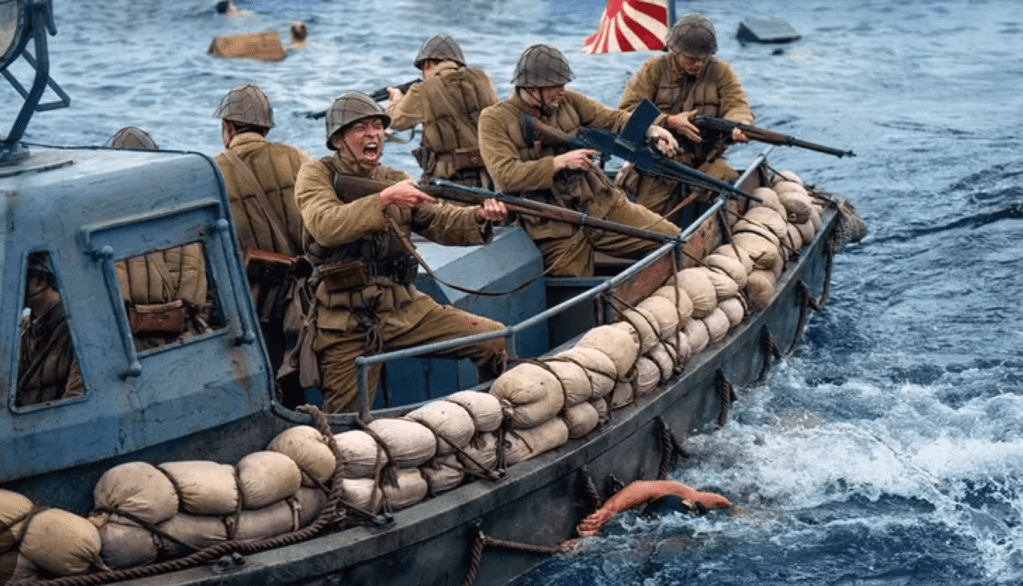
Sensing the end was near, the prisoners managed to break out of one of the hatches by 9 AM with the help of some knives that they had kept hidden. Six suicide guards had been left on the ship under the command of a Japanese lieutenant who ordered them to begin firing on the emerging prisoners from their bridge positions. The incline of the ship made climbing up the ladders difficult and many men fell back into the hold slipping on the steep steel plates lubricated by urine and excrement. Still more and more men emerged and overwhelmed the Japanese guards, literally throwing them off the ship and the shooting stopped. By 11 AM the Lisbon Maru finally sunk taking over 800 POWs with her who had not managed to escape the holds. The rest of them were in the water swimming to nearby Chinese islands near the mouth of the Yangtze River. There were four Japanese transports in the area and instead of rescuing the survivors, they began shooting the Brits one at a time with small arms. It became a game. Ropes were tossed out and when thankful prisoners were pulled aboard, they were shot in the legs and thrown back into the ocean to die a slow and painful death.
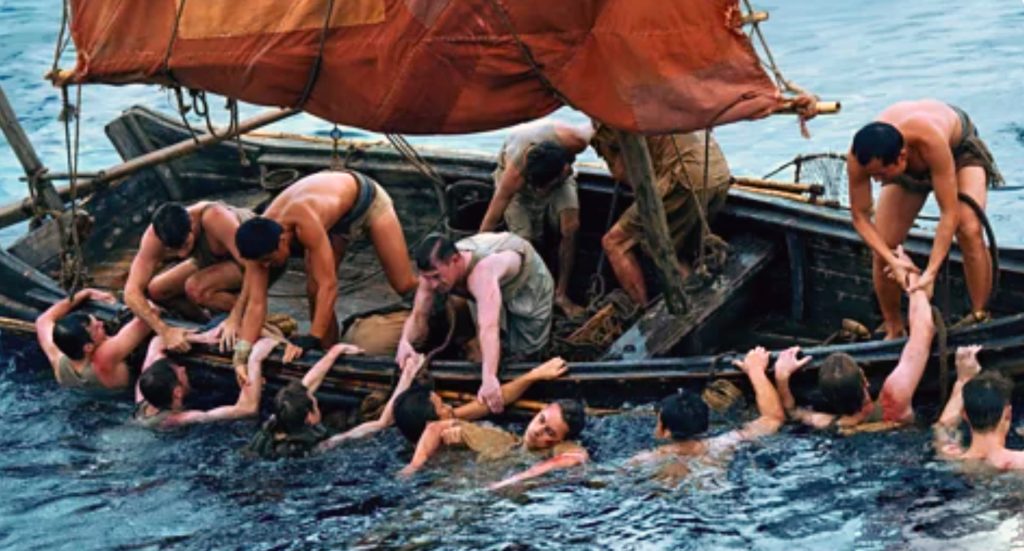
One of the British soldiers conversant in the Shanghai dialect managed to communicate to the Chinese fisherman that he encountered that the men in water were British and not Japanese. Instantly, the Chinese island inhabitants began a rescue operation with their fishing sampans. The villagers began to feed and clothe the rescued POWs. The Japanese also began to change their behaviour and began rescuing men out of the water perhaps after observing that the Chinese civilians were saving so many that they could no longer claim the sinking of the Lisbon Maru had killed all the POWs outright. After all the POWs were recaptured and assembled in Shanghai, they continued onto Japan as a slave labour work force. Many would not survive.
Below are some of the Canadians who served directly in the British Armed Services that were aboard the Lisbon Maru.
Henry J. Everard – Royal Navy: Petty Harbour, St John’s, West Newfoundland
Henry was liberated from Osaka 1b POW camp but died in New Zealand on April 17, 1946 recovering from injuries sustained in captivity.
Maurice J.A.G. Lynch – Royal Army Medical Corps: Quebec
Captain Lynch was considered too sick to travel and left at Shanghai after the sinking. He later assumed the role of Senior Allied Officer at Hakodate 2b POW Camp and liberated from that camp.
Strangeways O’Leary – Royal Corps of Signals: St Catherines, Ontario
Strangeways was liberated from Osaka 1b POW camp and continued with a career in the army postwar retiring with the rank of Warrant Officer.
Arthur D. Smith – The Middlesex Regiment: Ottawa
Arthur was liberated from Osaka 2b POW Camp.
Harry E.l. Williams – Royal Navy: Squirrel Street, Banff, Alberta (Died on the Lisbon Maru)
Frank J. Woods – Royal Artillery: British Columbia (Died on January 6th, 1943 at Ichioka Stadium Hospital from bacterial dysentery)
The surviving British POWs were liberated from Japan and treated as heroes by the Americans and Canadians who ferried them home. Most ended up in Vancouver and took the CPR to Halifax and at every stop Canadians brought fresh food, fruits, chocolates and cigarettes to those on board who were luxuriating in sleeper cars.
The Captain of the Lisbon Maru was prosecuted and served seven years after the war. The Japanese Lieutenant commanding the prisoner guard detail did not survive the war.
I also encourage readers to watch this recent Chinese made film based on these events and released only in August 2025. Dongji Rescue is a well crafted film and stunningly beautiful. It is a rousing and heroic film pitting the simple Chinese peasant fisherman against the brutally evil Japanese with the Brits caught in the middle.
And in case you were wondering if it really happened, it did. When the British POWs realized that the Japanese had locked them into the holds with the intent that they would go down with the Lisbon Maru, they broke into singing It’s a Long Way to Tipperary. They chose to die with dignity. The Chinese director chose to preserve that universal real moment in film, and there would not have been a dry eye in the theatre.

 Jim Chung's Ramblings