The competition Mazda Rx7 running the 12A engine in the IMSA GTU category (under 2.5 L) won an unprecedented 8 consecutive Driver’s Championships from 1980 through to 1987. But in 1982 the factory produced a car to compete in the inaugural race of the season, the Daytona 24 Hours, running the 13B engine so that it ran against the larger displacement cars in the GTO category. This would be a historic stepping stone to Mazda’s entry into the top tier GTP or prototype class culminating in the 787B running the 26B 4 rotor engine and winning the premier endurance race of all time, the 1991 Le Mans 24 Hours.
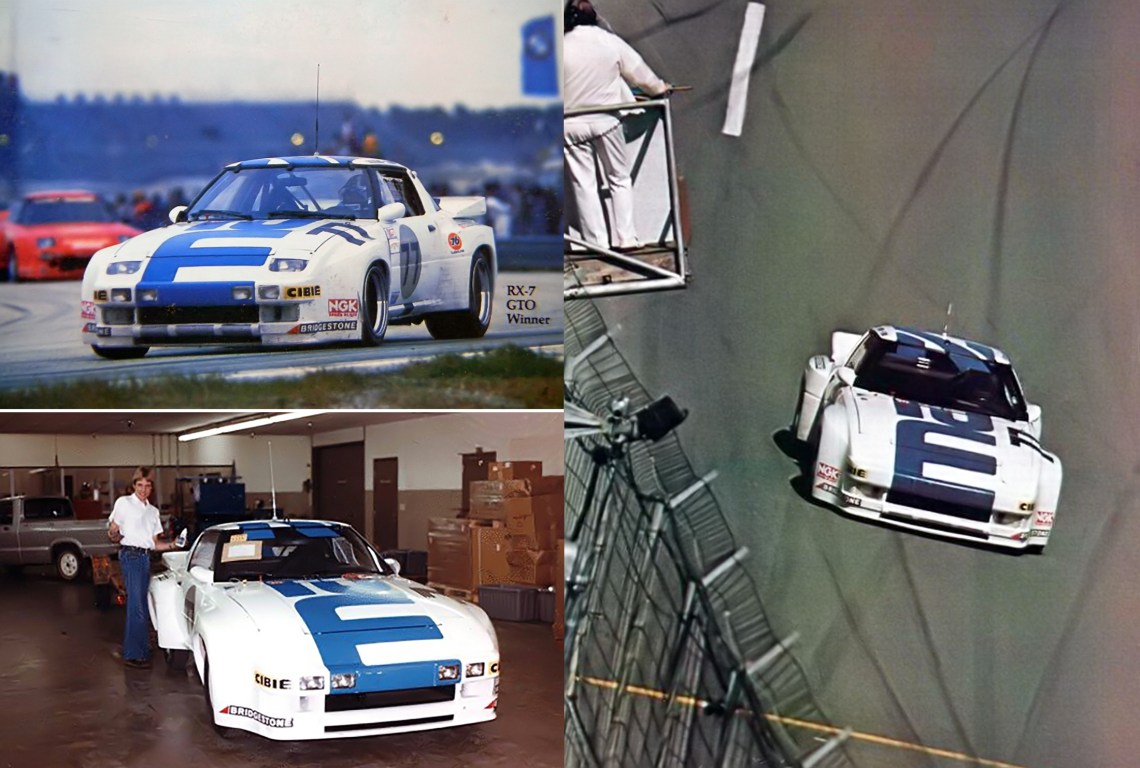
The extra 100 cc′s of displacement combined with Lucas mechanical fuel injection might yield an additional 40 bhp over the peripheral ported 12A′s 260 bhp but that would be insufficient to challenge the 450 bhp produced by the previous year′s winner, the BMW M1. Mazda would have to build an unbreakable chassis to go with the legendary reliability of its rotary engine in order to push its inherent advantages in endurance racing. Mazda designer Takashi Ono had to also design an aerodynamically optimized body whose shape is a refinement of the 1981 Kent Racing GTU that has been extensively written elsewhere in this blog. Ono′s actual initial sketches grace the top of this article and its interesting that his bold adornment of the blue MAZDA logo on the entire dorsal surface of the car survived as an intact design feature. Mazda was certainly announcing no lack of faith in its endeavor.
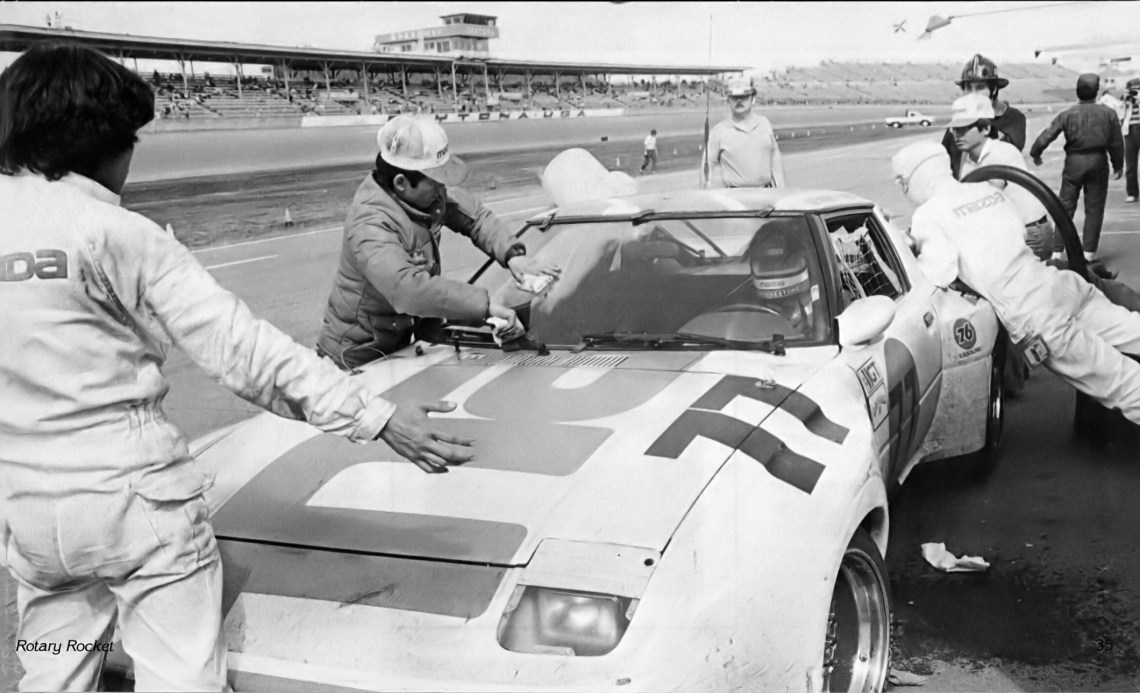
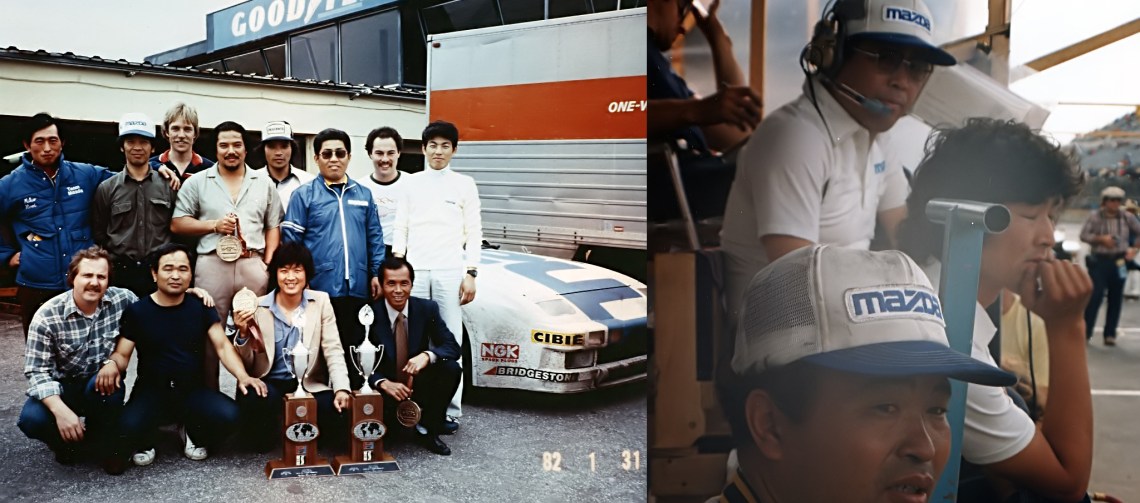
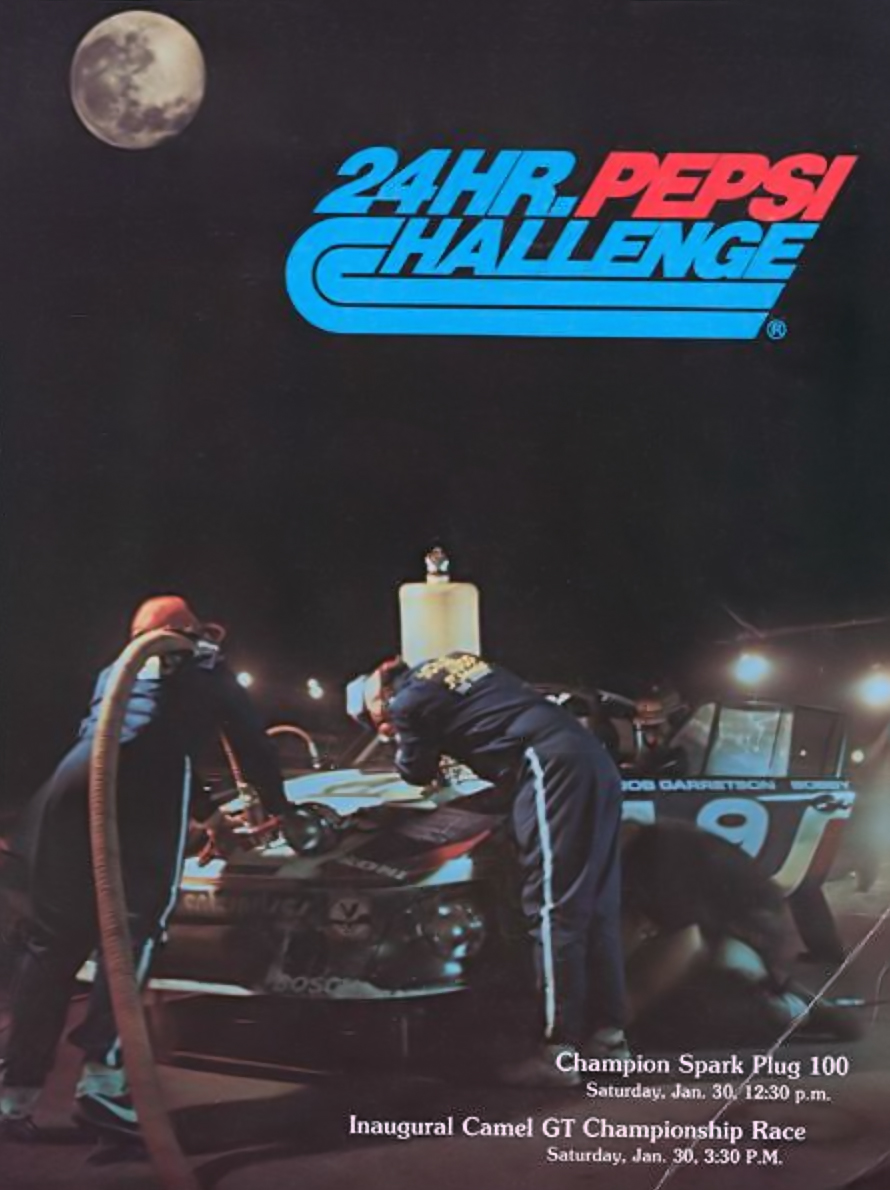
Since this is a 24 hour race, lighting becomes an essential feature. Notice the four bumper integrated driving lights and the elimination of the aerodynamically punishing pop up lights for manually actuated shutters that reveal inset headlights that do not protrude. The rear wing extends much further back than in the Kent Racer presumably for the same down force but with less drag. The side mirrors also reflect aero restyling vs the large mirrors in the Kent Racer.#77 qualified with the 13B peripheral port engine and fuel injection and was 4th fastest in the GTO category and 20th overall with a 1:59:913 lap time. Three BMW M1s and a Pontiac Firebird were faster. Later the engine was removed and replaced with a carbureted one that was more reliable for an endurance race. However, this setup would be slightly down on power and the car could consistently lap at 2:05 which projected to 28 laps/hr and 670 laps total. Coverage of the race was typically biased towards the three top place finishers which were all in the GTP class and this includes the venerable MotorSports magazine and even the Duke video coverage of the race. #77 competed only in this race and was promptly retired and shipped back to Japan. Within the first five minutes of the race, the GTO pole sitting BMW M1 was out, with an engine fire. That says reams about BMW reliability.After the 1st hour, #77 rose four positions to 16th and #54 BMW M1 held 13th as the leading GTO vehicle. By the 6th hour, #77 was on the leader board in 9th position and 1 lap down on #54 BMW M1. By hour 12 the #54 M1 overheated and retired. The third BMW M1, #21 also DNF. #77 took the GTO lead in 7th position.At 6 AM, #77 radioed in with rear end trouble. It was determined that the entire rear axle needed to be replaced and it was done in only 48 minutes. #77 went back out to regain the GTO lead that had been taken by #5 Porsche 911 Carrera RSR. In the end #77 regained the lead on the 23rd hour and finished 4th overall and first in GTO. #77 covered 644 laps, down the 26 laps it could’ve accomplished if not for the long pit stop for repairs. At 670, this would have brought it extremely close to the 683 laps run by the third place Porsche 935 K3 in the GTP class. These dominated this era of IMSA and could run 210 mph on the Mulsanne Straight at Le Mans.The Mazda GTO team and anticipation during the last lap.The Checkered Flag is out and Mazda parades its victory with the GTO class winning car followed by the pair of GTU class winning Kent Racing Rx7s.This GTO win set up the GTO win for the Akai Racing Beat Rx7 the following year. It not only won the GTO class, it came in 3rd overall. This would also represent the highest finish Mazda would ever attain at the 24 Hours of Daytona running a rotary (Mazda did come in 2nd in 2021 with its RT24-P DPI car). This time there was no way the Rx7 GTO could be ignored by the media. Their explanation was that it was the unusually high attrition combined with bad weather which allowed the Rx7 to finish so high. In other words, the Rx7 did not really deserve 3rd place, there were much better cars. But the very definition of a race, any race, is that you must finish. If you don’t even place, then you are grouped into a subgroup that is lower than the losers of the race. When those individuals complain about the members who placed 1st, 2nd or 3rd, it’s called whining. Notice the refined aerodynamic body of the 1983 Akai Racing Beat Rx7 GTO. 31 mamometers were placed on different spots on the body and a mounted Polaroid camera photo taken of their levels on a test track to determine air pressure at those spots and the bodywork reworked accordingly. The car weighs only 2083 lbs compared to 2700-2800 for other GTO competitors … but they may have twice as much horsepower. However a lighter car will be less stress on suspension components and tires, and greater chassis reliability in an endurance race.Official program to the 1982 Daytona 24 Hrs aka 24 Hr Pepsi Challenge.
Addendum: March 4, 2024.
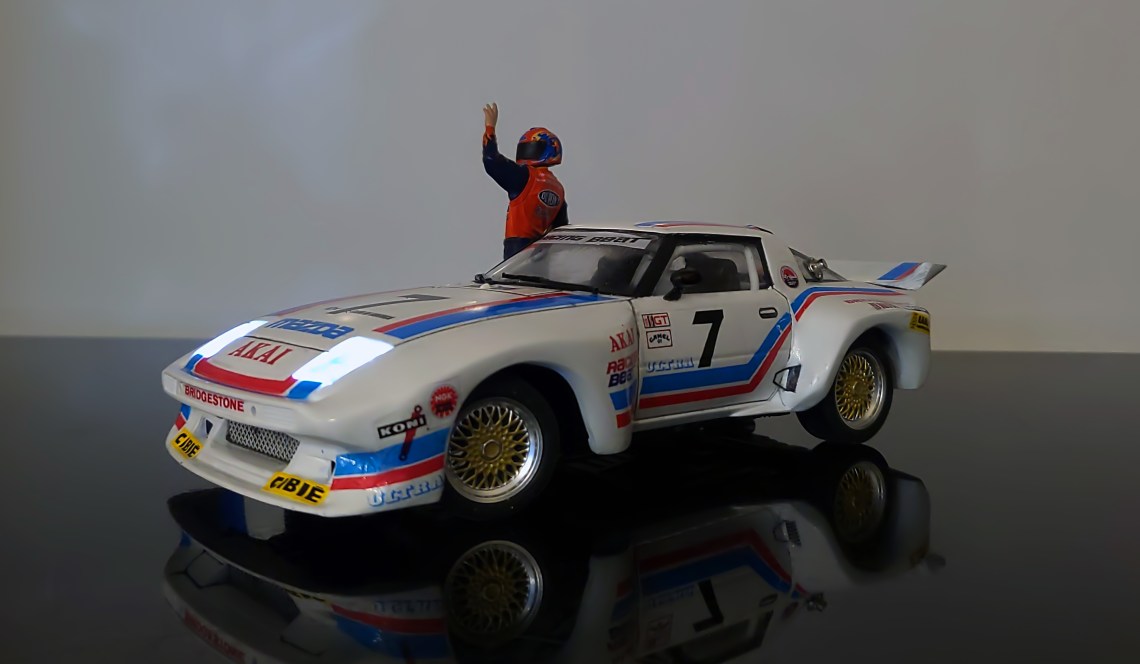
I was so taken with the one time existence of the 1982 factory Mazda GTO race car that I wanted to build one. But no model kits of this very rare car exist – ever. Before the car was shipped back to Japan, it did make a brief appearance at the Chicago Auto Show at the Mazda venue but it has never been seen again. There was a project to manufacture and sell 1:43 scale and a Hot Wheels version of this car, but it never made it to market.
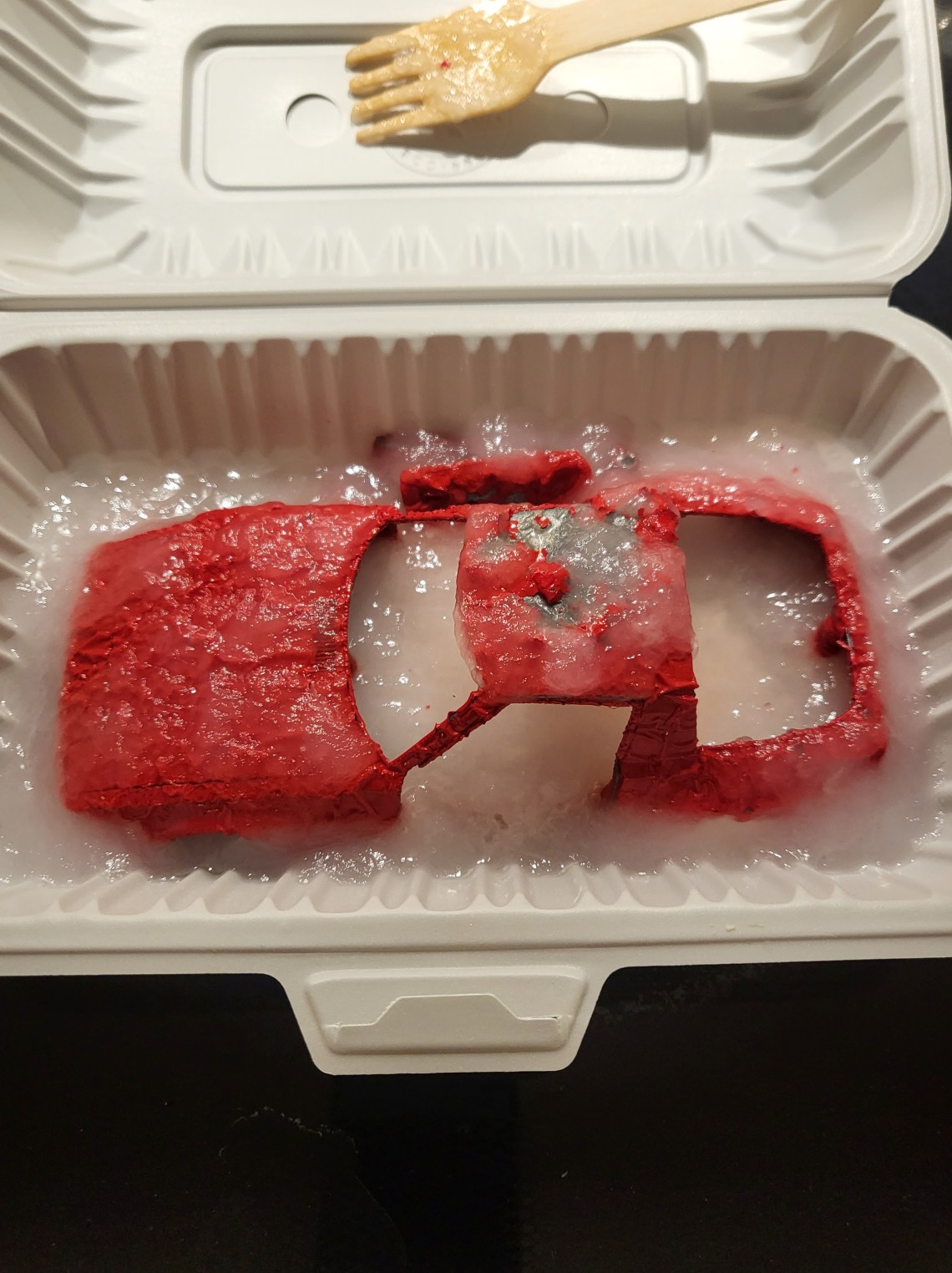
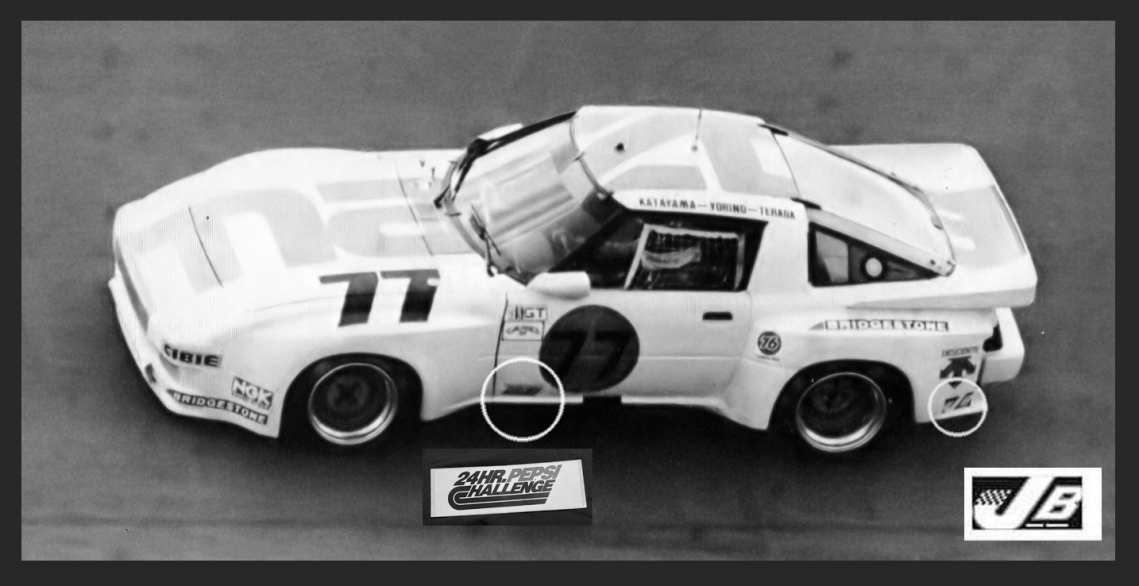
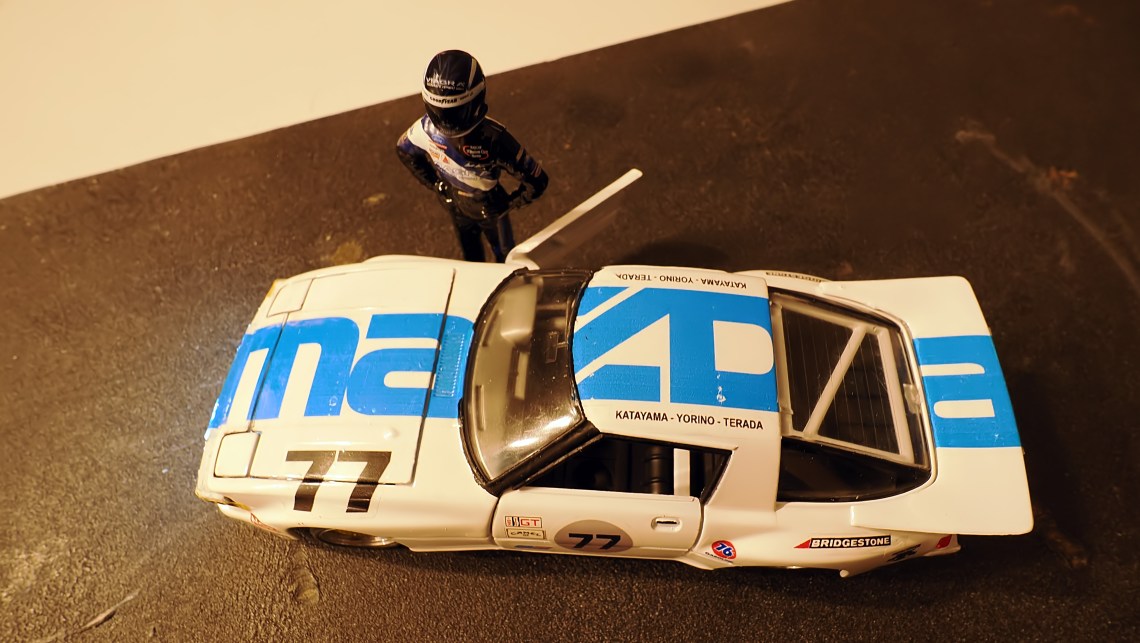
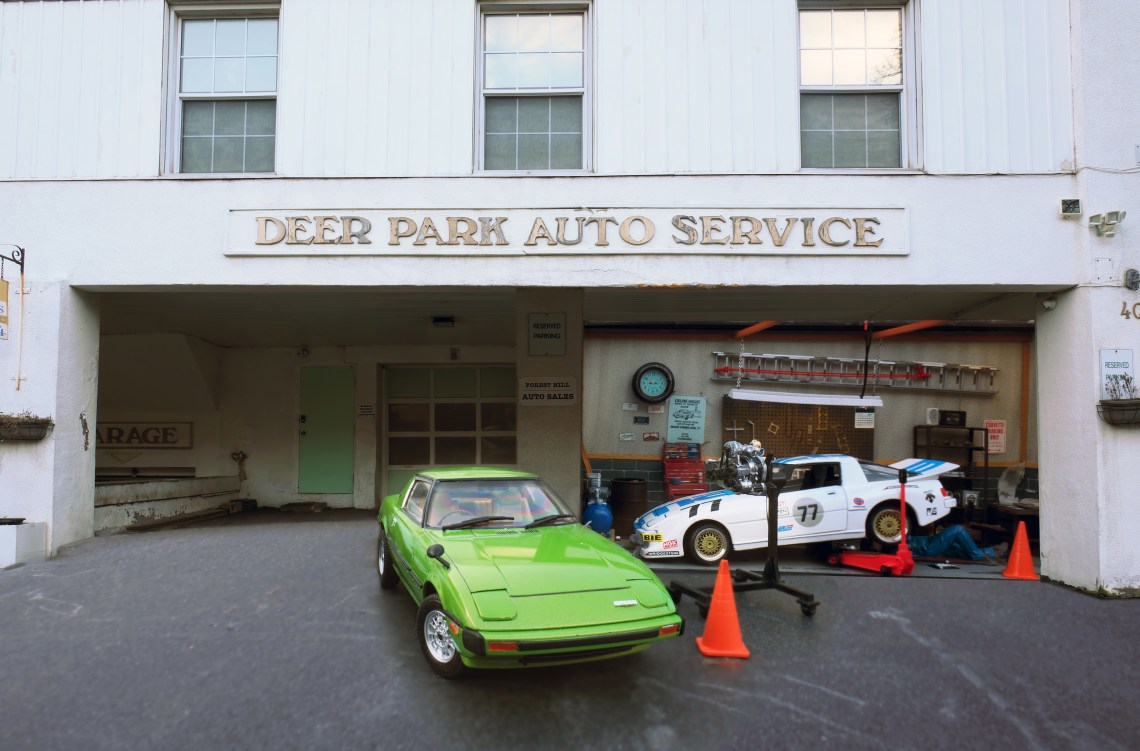
The starting basis for the project was this well worn vintage 1:24 Bburago metal die cast racing Rx7.There is a whole new category of paint strippers that are ecologically safe. No fumes, noncaustic and nontoxic. The only downside is that they do take more time, I had the model in for 24 hrs before the paint peeled out effortlessly.My miniature paint booth … which I set up in one of my locker spaces in my condo building since I no longer have a garage to work in.This project would not have been possible without the important race decals. You can design the graphics in Photoshop and print them with color ink jet or laser jet printers using the appropriate water transfer decal paper. Ink Jet printed decals need to be sealed with spray varnish to prevent the colors from bleeding when immersed in water.Because there are so few photos of the car, it can be difficult to determine the identity of all the race decals used. Here were two that stymied me for a few days until I realzied the one on the bottom of the door was the decal for the Daytona race itself. The one on the rear still perplexes me. I have no idea what business it represents, likely one that is no longer operating. Any guesses? The only reason I have this clear graphic is because I realized it is the same sponsor Mazda used on their 1979 Daytona 24 Hrs when they debuted a pair of brand new Rx7 Fb’s to the world and I have the decal sheet for those cars.The finished version, complete with miniature rectangular LED lights integrated into the bumper like the Cibie driving lights in the real thing. I also swapped out the original wheels with the correct low profile tires and BBS wheels.And that iconic MAZDA logo running along the entire dorsal surface of the car.Deer Park Auto Service … for all your rotary needs.The real thing.This is my final model building venture as I always wanted a model of this car but nobody has ever built one … until now. It is modified Rx7 SA 1:24 plastic model kit with the widened fenders handcrafted from Tamiya slow cure epoxy, The too small original tires and wheels have been replaced with the larger gold mesh BBS rims. Does anybody know what the race sponsor sticker ULTRA refers to? I had to make that one from scratch since I could not determine what company it belonged to so there is no Internet record of its logo.The most difficult modification was the headlight conversion to replace the aerodynamically penalizing popup lights. I bought a plastic kit for Ryosuke Takahashi’s 5th stage modified Fc as it appears in the Japanese manga Initial D and used its headlight conversion kit as well as the internal roll cage on this model. The original white painted light covers still fit and that’s how the team would normally race the car in short IMSA races where headlights are not needed. They would also delete the windshield wipers if rain was not imminent. The decals are a great alternative for things that simply can’t be painted. The air intake grills for the cabin at the base of the windshield are impossibly narrow but I just designed a decal for them and they turned out much better than attempting to paint them.
I have degrees in Biochemistry and Dentistry and practice clinically 2 days a week. The rest of the week I devote to photography and bringing you the very best writing in this blog.
View all posts by jimchungblog












 Jim Chung's Ramblings