

I belong to the front end of Generation X and often wondered if our generation would be as willing and as courageous to volunteer for service in a world war as did the Greatest Generation. This is not a slight against my own, the world is simply a much more sophisticated and informed place than it was in the 1930s. Unless you had a close family member ruined by the Great War, the common man had little knowledge of the brutality of combat. And even less about the geopolitics of a world deeply stained by rampant racism. The Great Depression had also made the common man hungry and forlorn. The war was an opportunity to be fed, housed and paid and belong to something greater.
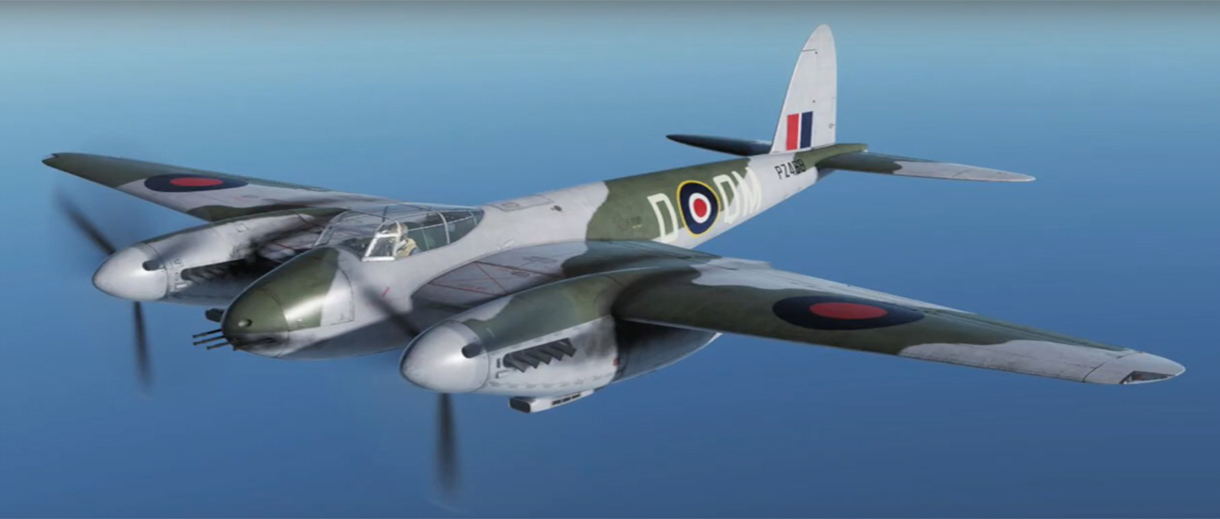
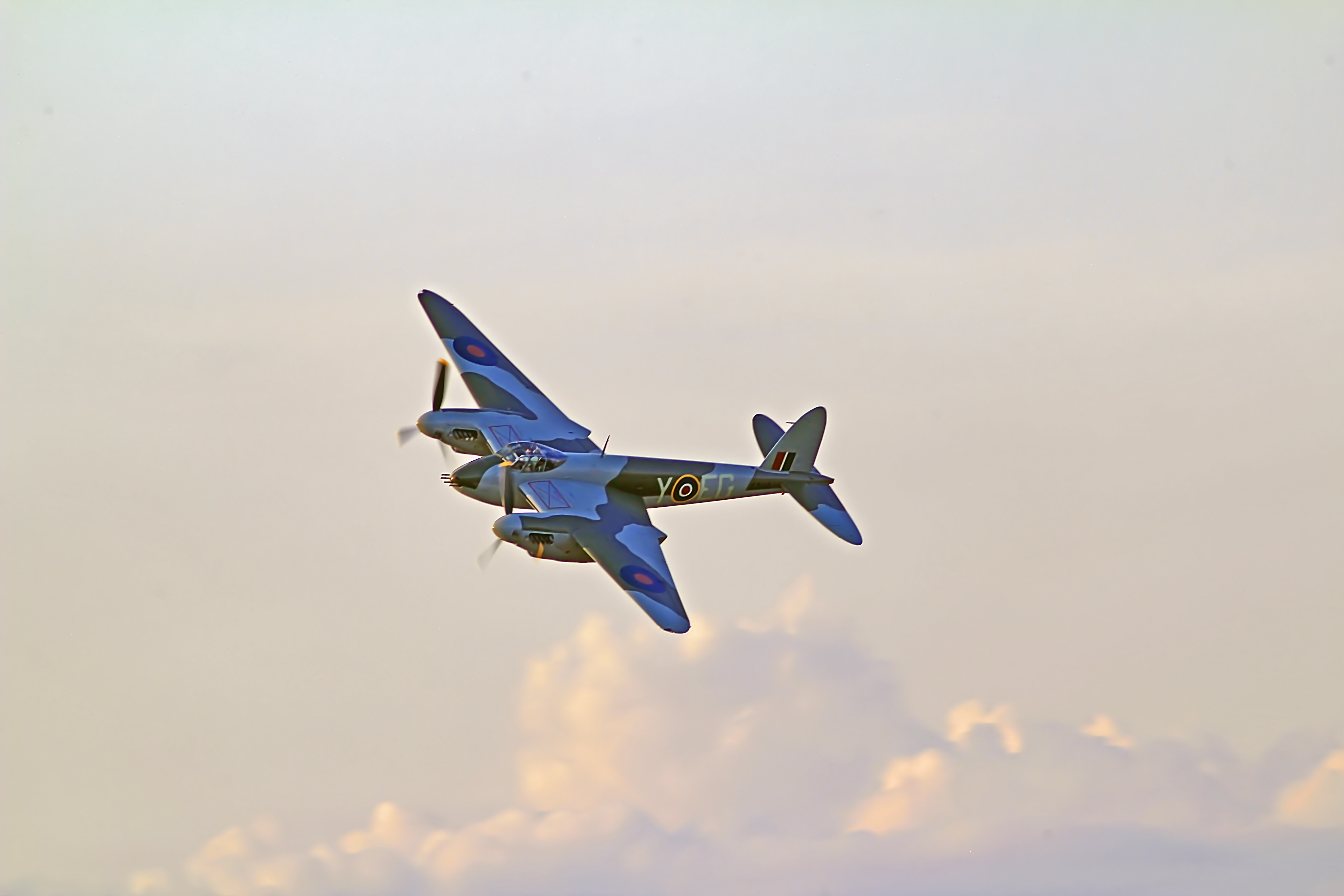
There are always exceptions and I was pleasantly pleased to learn one of those exceptions is still with us and just turned 100 years old this past January. George E. Stewart, DFC (Distinguished Flying Cross) still lives in his birthplace of Hamilton, Ontario and remains apparently undiminished in every regard from the days when he flew 50 missions in a de Havilland Mosquito night fighter and has logged over 1200 hours in that model alone, more than any other living human being.
George describes himself as a runt and not athletically inclined but did develop an obsession for flying from the young age of 8 years old. At 18, he joined the RCAF in March 1942 and began flying Tiger Moths in Goderich in September. By March of 1943 he was commissioned as a flying officer (earning $1.35 a day!!) and was stationed to CFB Summerside in PEI, however he begged that this posting go to a married officer as he wanted to be sent overseas. He got his wish.
Still, George was a remarkably astute teenager and remained so for the duration of the war and likely his entire life which may explain his longevity. He knew to avoid the brutality of a ground war with the conceivable risk of hand to hand combat. He knew about the harsh physical conditions of the North Atlantic as a career in the navy would entail escorting convoys to Europe as well as its mixed success fighting off submarines. He had lost his cousin when the HMCS Athabaskan was sunk with most of her hands lost. This being the Tribal Class Destroyer sister ship to the HMCS Haida (moored in Toronto Harbour for decades as a floating memorial).
At RAF Station Bournemouth, George was expecting to be assigned to heavy bomber training but was shocked to learned he could voice a preference, as long as it was not fighters. He told them it has been his lifelong dream to fly the de Havilland Mosquito. No promises but we’ll assign you to a night fighter group at RAF Station Grantham and if you’re good enough you’ll qualify for Mosquitoes.
Ultimately he joined #23 Squadron, RAF as the sole Canadian pilot along with Kiwis, Aussies, Poles, South Afrikaaners, Yanks and Brits! He became operational in July 1944 along with his navigator Paul Beaudet, a Québécois. Displaying incredible sangfroid, George made a pact with Paul so that they could survive the war. George promised to make only one attack run at each target, “If I’m not good enough to get it the first time, both the enemy and us deserve to live.” Many a pilot has died from alerted ground fire after going back to properly finish off the target.
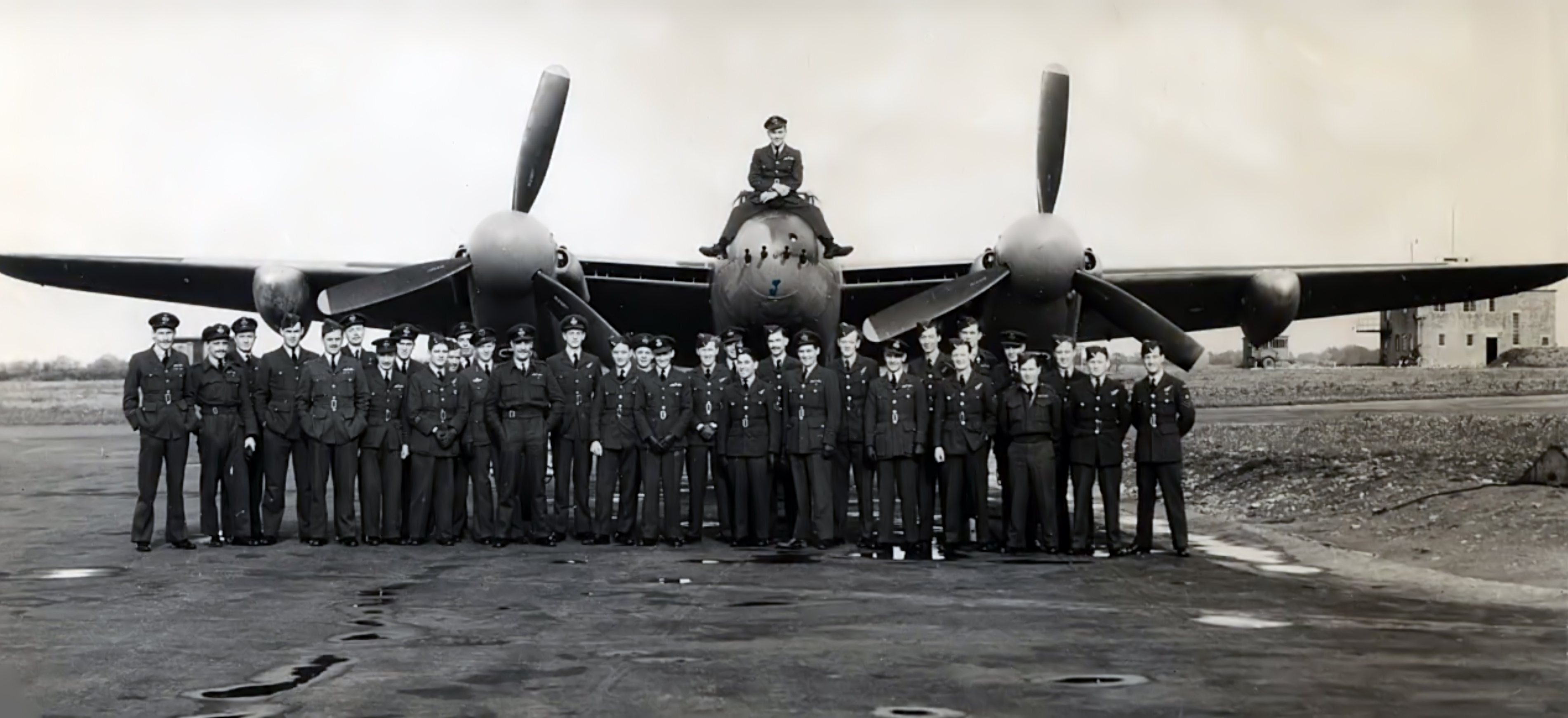
He clearly continued to exercise intelligent conduct in all aspects of flying since he never aborted a mission and finished his 50 operations by December of 1944 and they were both released to return to Canada to become instructors. Modern pilots may fail to understand the difficulty of flying without GPS. All their flights were conducted by dead reckoning, over water to avoid tangling with the enemy with the occasional sighting of coastal landmarks.
“We flew from England to Gibraltar, 1200 miles by dead reckoning. And then to Casablanca, Tunis and Malta before finally landing in Sardinia. But #23 Squadron was over strength so they didn’t need us and sent us home after taking the Mosquito. It took weeks to return to England often by ship. We ferried additional Mosquitoes 3 or 4 more times before #23 Squadron returned to England.”
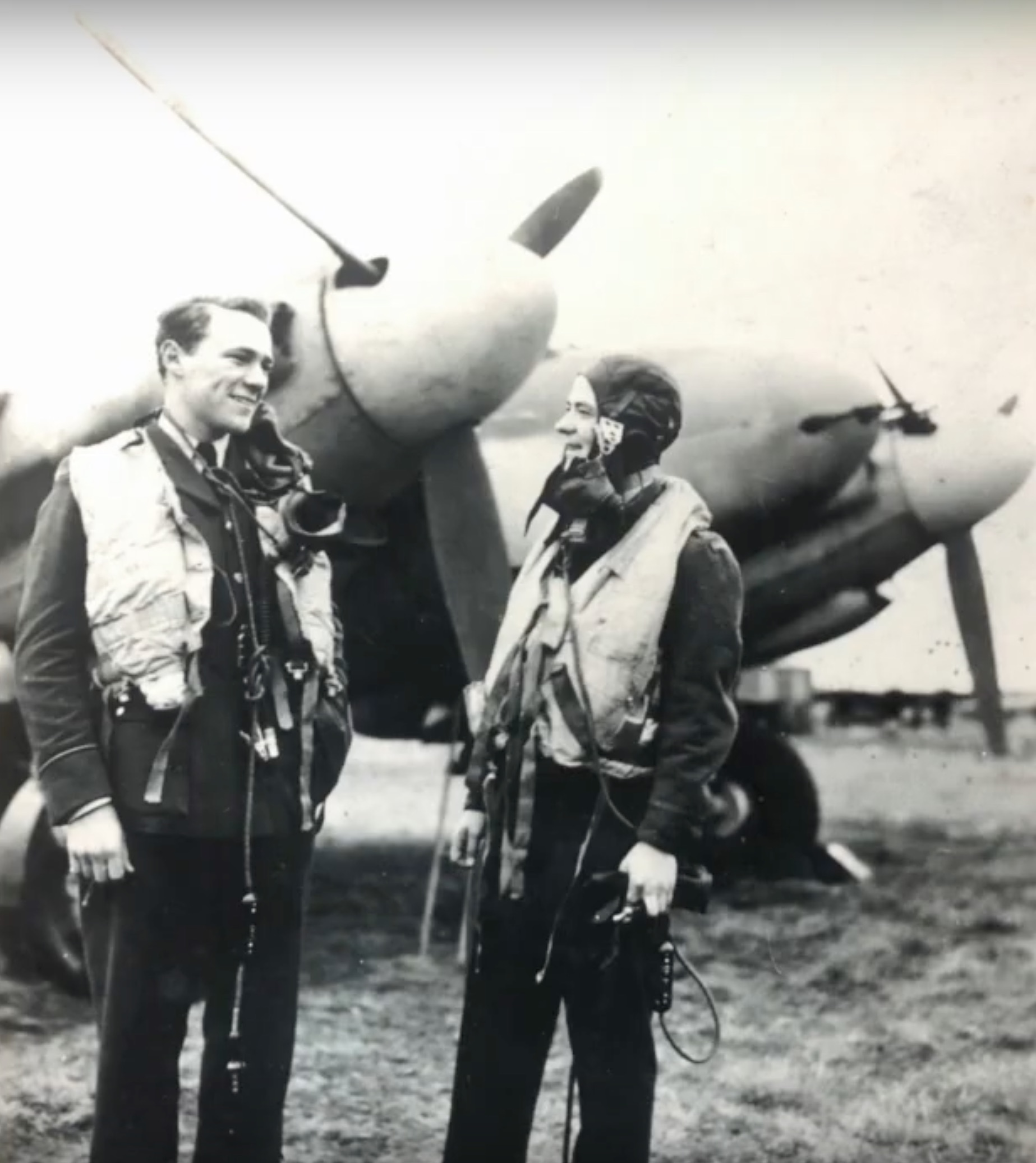
Their night intruder missions often involved flying around a German airfield as low as 500 feet for an hour to catch prone German night fighters landing while low on both fuel and ammunition. They could be heard but not seen and this was often enough to deter nervous German pilots to land at an alternate airfield, often crashing in the process while running out of fuel. On their best night they bagged both a Ju 88 and a Heinkel 111 as both approached for landing. They also destroyed 15 trains although George never targeted passenger trains and only the locomotive engine of freight trains.
It was at this point that George’s career takes an unexpected turn .
In July 1941, Canada began production of Mosquitoes at the de Havilland plant located at Downsview Airfield which is now today Downsview Park in the northern part of Toronto. Using Rolls-Royce Merlin engines made by the Packard Automobile Company in the US and birch sourced from British Columbia for the frame, slightly over 1000 aircraft were built, primarily trainers and two improved bomber and fighter/bomber models. Each aircraft could only be given about 5 hours of post production testing before being flown to the UK and despite expected losses, over 500 found their way successfully overseas.
At war’s end, some 100 Mosquitoes had not been accepted by the RCAF and were placed into storage with another 110 surplus Mosquito bombers with a combined worth of about $30 million. Facing the scrapyard, in 1947 about 200 aircraft found a willing buyer in the form of the Nationalist Government of China led by Generalissimo Chiang Kai-Shek. It was a fantastic deal for them since they would be getting an air fleet of fast, state of the art bombers for only $5 million with which to resume the bloody civil war that it was engaged in with Mao’s Communist Chinese forces.
The sale, along with the involvement of Canadian service crews and RCAF pilot instructors sent to China, was kept a distinctively low key affair so that Canada would not be viewed as politically favouring one faction over the other in China. The Nationalists were a Fascist and repressive authoritarian government under Chiang Kai-Shek but after his death, the regime evolved into the democratic system we see today in modern Taiwan. In 1947, things were not quite so clear.
George became one of the flight instructors helping to transition Chinese pilots used to flying the B-25 Mitchell bomber. The planes were crated and sent by sea delivery to Shanghai where they were reassembled and test flown by de Havilland personnel at the Shanghai Daichang Air Base before official delivery to the Chinese.
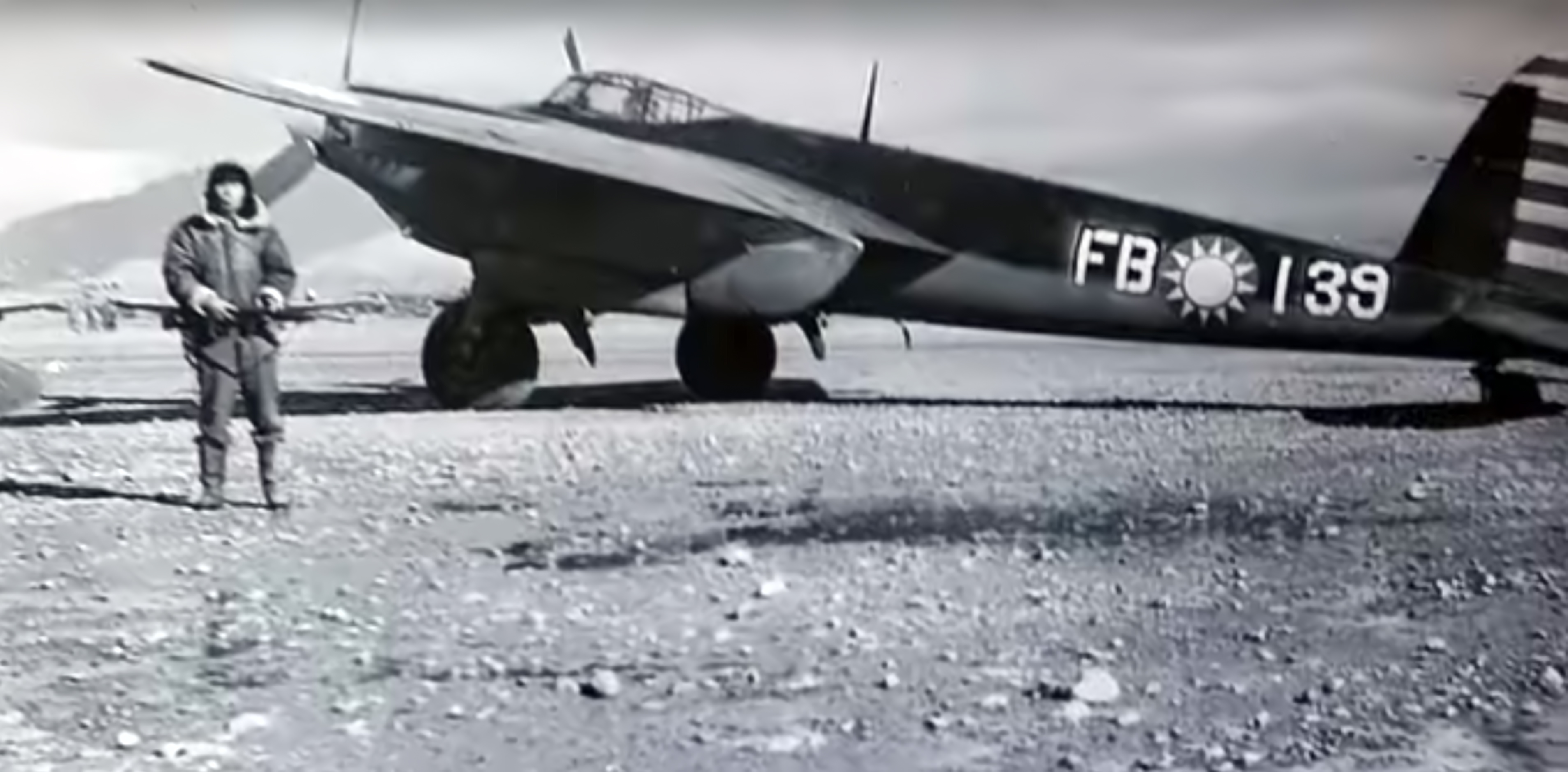
Training of the Chinese pilots took place in Hankow where three squadrons were envisioned. But the combination of a strong persistent crosswind at the airport and the sensitivity of the Mosquito to preflight setup and takeoff procedures resulted in many, many accidents and loss of both many aircraft and pilot lives. Both Merlin engines rotate in the same direction causing a very strong torque effect that must be compensated with opposite rudder, otherwise the aircraft is prone to flipping over on its back and crashing upon takeoff. George was the one to finally reach all of the non English speaking Chinese pilots and instill the necessary corrections. The planes finally saw combat in late 1948 and made nearly 800 sorties in 1949 but were the wrong response to Mao’s guerrilla style warfare of insurgency. Nearing the end in 1949, the planes apparently stopped a Communist invasion fleet of a thousand vessels by destroying half of them but likely these were very small and rudimentary vessels since Mao had no navy to speak of. The Nationalists evacuated to Taiwan along with most of the Mosquitoes with a third lost to noncombat accidents. By 1951 they were decommissioned and their guns salvaged for use on patrol boats. (Click on following images for full screen views and captions)



.
.
.
Addendum – Today!
History comes alive when you can tie in current events with those of the past. Oppenheimer was the great movie of 2023 and if you saw it you will have learned a great deal of what was involved in the US effort to build the first atomic bomb. Niels Bohr was the great Danish physicist who perhaps was nearly as famous as Einstein in that era (played by Kenneth Branagh in the movie) and received the Nobel Prize in 1922 for his model on the structure of the atom. You should all know this, its even taught in high school. They also teach DNA in high school and if you know neither … maybe you should reconsider living in the 21st century. He had chosen to remain in Denmark but after its capitulation to the Nazis, he decided he needed to escape to the West with new information about the Nazi’s own nuclear program as well as to evade an impending arrest by the SS who considered him Jewish. He made his way to neutral Sweden which supplied both the UK and Germany with vital high quality ball bearings. Because of Sweden’s neutrality, only unarmed civilian aircraft were allowed to land so Britain converted Mosquitos painted in BOAC (British Overseas Airline Company, the precursor to British Airways) colors and crewed by BOAC uniformed aircrews. Mosquitos were used because they were fast enough to evade Nazi fighters intent on intercepting them once they cleared Swedish airspace. Instead of carrying ball bearings, this one time they smuggled Niels Bohr out in the bomb bay but he nearly died because he failed to put on his flight helmet and hear the Navigator inform him to turn on his oxygen supply as the twin engined Mosquito was able to operate at high altitudes beyond that which pursuing single engine fighters could operate. When the pilot was unable to raise Bohr on the intercom, he correctly surmised the Bohr had passed out and dropped his altitude, saving Bohr’s life. Needless to say, Bohr made it to America and Los Alamos and provided small but critical assistance in the bomb’s design.
Addendum: June 17, 2024.
George died today in Hamilton, Ontario regaling hospital staff with conversation and tales up until the very end.

 Jim Chung's Ramblings
I met George in 2011. He had invited me at his home.
I didn’t know he has passed away. I have learned it here.
LikeLike
Hello Jim – what a great tribute – many thanks! What a man as well…My father F/L (John) Derek Harris was also a member of 23 Squadron and I suspect that is him on the far left of the squadron picture. However the moustache is rather more full than in most pictures of him so I am not sure. You can find other pictures on the Squadron website so lovingly curated by Pierre. Do you have any notes about others in the pictures or can you confirm who the far left officer is? Thanks!
LikeLike
Hello Jim – thanks for this great evocation of a wonderful man. I wonder if he is the last surviving member of the wartime pilots and imagine so?
My father F/L John Derek Harris was also a member of 23 Squadron towards the end of the war on night intruder duties. You can see various posts about him on squadron website. I wonder if that is him at the far left of the squadron picture but am unsure because his moustache looks more full than many other pictures from that time. Do you have a record of who the people are in that picture?
Thanks for any help you can give and best wishes,
Peter Harris
LikeLike